
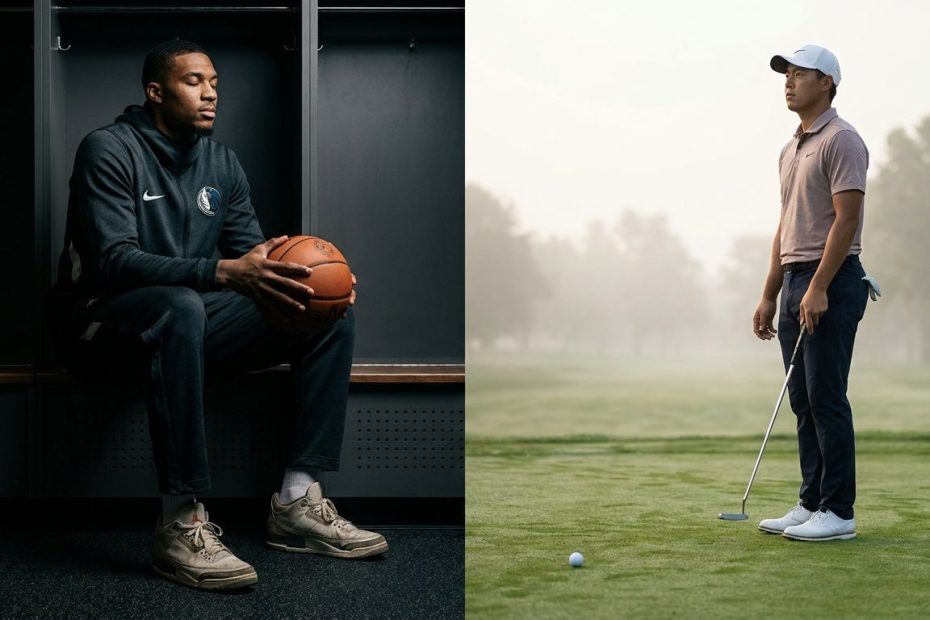
Cross-training habits help basketball players and golfers handle pressure better by training calm breathing, repeatable routines, mental rehearsal, present-moment focus, and body control. The same skills that steady a free throw can also steady a short putt when the moment feels bigger than the movement.
If you play basketball, golf, or coach athletes in either sport, pressure usually shows up in predictable ways: rushed decisions, tight hands, shallow breathing, and attention drifting toward the score. This article breaks down five habits that transfer across the court and the course without stealing time from skill practice. You’ll learn how to build a practical mental training routine that supports execution when one shot matters.
Habit 1: Master Diaphragmatic Breathing To Short-Circuit The Stress Response
Diaphragmatic breathing trains you to use your belly and lower ribs instead of shallow chest breathing. Under pressure, that matters because rushed breathing can feed the same tension you’re trying to escape. A basketball player at the free throw line and a golfer standing over a putt face the same problem: the body speeds up before the skill has a chance to settle. Slow, controlled breathing gives you a physical reset before the shot.
Start with a simple rhythm: inhale through the nose, let the belly expand, pause briefly, then exhale longer than you inhale. Keep the shoulders quiet and the jaw relaxed. You don’t need a long breathing session during competition. Two controlled breaths before a free throw, tee shot, or putt can be enough to bring your attention back to the task.
Use this habit during practice before you expect it to work in a game or match. Add it before every free throw set, every short putting station, and every pressure drill. The goal is not to feel calm all the time. The goal is to know how to lower tension on command.
Habit 2: Develop A Consistent Pre-Performance Routine
A pre-performance routine gives your mind a job before the shot. Without one, pressure fills the empty space with score thoughts, outcome worries, and mechanical clutter. In basketball, that routine might include one breath, two dribbles, eyes on the rim, and release. In golf, it might include target selection, one rehearsal motion, one breath, and commitment.
Keep the routine short enough that you can repeat it under stress. Long routines break down when the clock is running, the group is waiting, or fatigue sets in. The strongest routines are easy to recognize and hard to overthink. They cue the same sequence every time, so your body doesn’t need a new plan when the moment gets tense.
Practice the routine before low-pressure reps, not just clutch reps. If you only use it when you’re nervous, your brain learns to link the routine with danger. Use it during warmups, technical work, scrimmages, putting drills, and competitive games. Repetition turns the routine into a familiar lane for your attention.
Habit 3: Use Visualization To Rehearse Pressure Moments
Visualization helps you rehearse the shot before your body performs it. You picture the target, the feel, the tempo, and the successful finish. For basketball players, that could mean seeing the ball leave the fingertips cleanly and drop through the net. For golfers, it could mean seeing the line, pace, roll, and finish of a putt before taking the stroke.
Good visualization is sensory, not vague. You should feel your stance, hear the gym or course noise, notice the target, and rehearse the movement at game speed. Keep it realistic. If the shot is hard, picture yourself handling the difficulty with a steady routine instead of pretending pressure doesn’t exist.
Use visualization before practice blocks and before selected reps inside practice. You don’t need to visualize every shot all day. Pick pressure-like reps: late-clock jumpers, one-and-one free throws, three-foot putts, first-tee swings, or end-of-session challenges. Mental rehearsal works best when it matches real performance demands.
Habit 4: Practice Mindfulness To Stay In The Present
Mindfulness trains you to notice pressure without chasing it. That skill matters because pressure often pulls your attention into the past or future. You miss one free throw and start thinking about the last miss. You miss one putt and start thinking about the scorecard.
A simple mindfulness drill starts with attention on one anchor. Use the breath, the target, the feel of your feet, or the sound of the ball. When your mind moves to the outcome, label it briefly and return to the anchor. No drama, no argument, no long mental speech.
This habit helps basketball players slow the mind during fast possessions and helps golfers avoid carrying one bad shot into the next swing. It doesn’t make you passive. It sharpens what you choose to notice. Under pressure, that difference can decide whether you execute the next movement or keep replaying the last one.
Habit 5: Incorporate Yoga To Build Body Awareness And Mental Calm
Yoga supports pressure performance because it connects breathing, balance, mobility, and attention. Basketball players need body control through contact, fatigue, landing, and quick changes of direction. Golfers need rotation, balance, posture, and a smooth tempo. In both sports, tightness often appears when pressure rises.
Use yoga as a support habit, not a replacement for sport practice. Short sessions can target hips, ankles, shoulders, spine rotation, and controlled breathing. You’re not chasing extreme flexibility. You’re building enough range, awareness, and calm to move without forcing the skill.
A practical session can be ten to fifteen minutes after practice or on a recovery day. Choose controlled movements, steady breathing, and positions you can hold without strain. The value comes from noticing tension early and releasing it before it changes your shot. That body awareness carries directly into a free throw, jump shot, chip, putt, or full swing.
How Basketball And Golf Pressure Skills Transfer
Basketball and golf look different from the outside, yet pressure often works the same way inside the athlete. One sport is fast, reactive, and physical. The other gives you more time, which can invite overthinking. In both settings, the athlete must narrow attention and execute one movement cleanly.
The free throw and the short putt are the clearest bridge between the two sports. You have time to think, everyone can see the result, and the movement is familiar enough that missing feels mental as much as technical. That’s why cross-training habits work so well here. They target the space between preparation and execution.
Use the slower sport to train patience and the faster sport to train quick recovery. Golf teaches commitment before motion. Basketball teaches you to move on after a mistake because the next play arrives fast. When you blend those lessons, your pressure response becomes more adaptable.
How To Start Your 10-Minute Cross-Training Routine Today
You don’t need a separate mental training day to use these cross-training habits. Start with ten minutes before or after your normal practice. The routine should be short enough that you’ll repeat it and specific enough that it changes how you compete. Consistency beats a long session that happens once.
Begin with two minutes of diaphragmatic breathing. Add three minutes of visualization for one basketball pressure shot and one golf pressure shot. Spend three minutes practicing a pre-performance routine without rushing. Finish with two minutes of mindful breathing or a simple yoga-based mobility drill.
Track the routine the same way you’d track makes, misses, fairways, or putts. Note whether you used the habit, not whether every shot went in. Pressure training is about repeatable behavior under stress. The results become easier to trust when your process stays steady.
Common Mistakes That Make Pressure Worse
The most common mistake is waiting until competition to train pressure skills. If your first serious breath, routine, or visualization rep happens in a big moment, it won’t feel natural. Pressure exposes habits. It rarely creates new ones on command.
Another mistake is turning mental training into a long checklist. Too many cues can overload your attention before the shot. Keep your routine simple: breathe, see the target, commit, move. If a cue doesn’t help you act, remove it.
Many athletes also confuse calm with readiness. You don’t need to feel flat or emotionless to perform. You need enough control to aim your energy. A little edge can help when your breathing, routine, and focus keep it pointed in the right direction.
How Can Basketball Players And Golfers Handle Pressure Better?
- Breathe low and slow
- Use one repeatable routine
- Visualize the shot
- Stay present
- Train body control with yoga
Build Pressure Habits Before The Big Moment Arrives
Pressure gets easier to handle when your response is trained before the score, crowd, or match situation raises the stakes. The best cross-training habits are simple: breathe with control, repeat a trusted routine, rehearse the shot mentally, return to the present, and build body awareness through yoga. These habits don’t replace shooting, ball handling, putting, or swing work. They help those skills show up when tension rises. If you want better late-game free throws and steadier putts, train the space before the shot with the same care you give the shot itself.
References
- USA Basketball: Yoga For Basketball Players
- Golf Digest: Yoga For Golfers
- Professional Golfers’ Association Of America: Mindfulness In Golf
- STACK: Diaphragmatic Breathing And Athletic Performance
- Association For Applied Sport Psychology: Imagery In Sport
- Golf.com: Pre-Shot Routine And Pressure
- USA Basketball: Developing A Free Throw Routine

Barry Bekkedam is an entrepreneur and finance executive focused on investment management and advisory. A former Villanova standout and member of Canada’s men’s national basketball team, he now leads ventures in asset management and philanthropy, including the Barry Bekkedam Foundation supporting education and community development.