
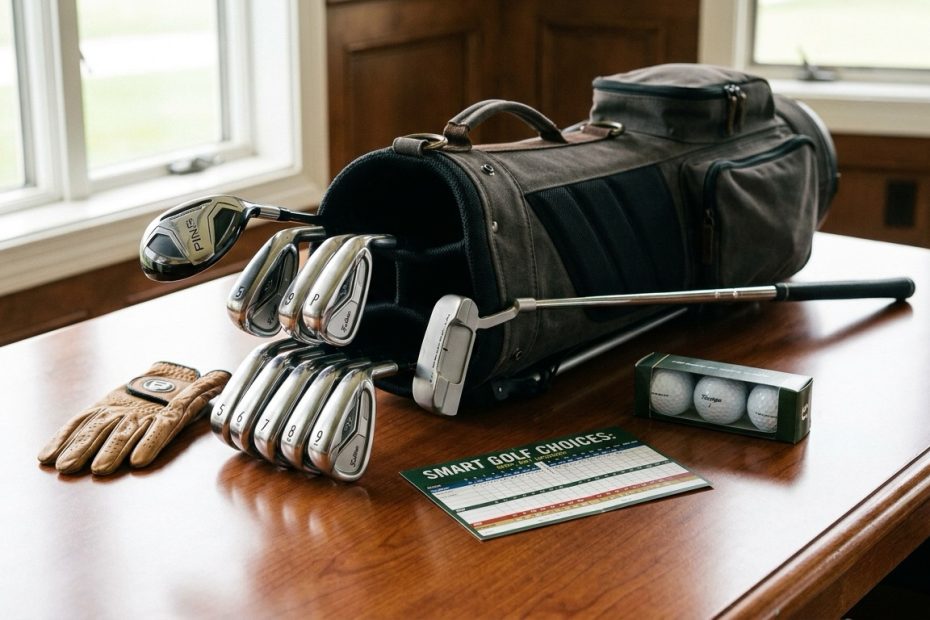
Best Beginner Golf Clubs should be rented for a one-time round, bought when you plan to play regularly, and upgraded only after your swing, distances, and scoring pattern show a real equipment need. A beginner does not need a perfect 14-club bag; you need forgiving clubs that help you make solid contact, learn distance, and enjoy the course.
Golf equipment can get expensive before it gets useful. This guide gives you a practical path through renting, buying, and upgrading, so you avoid wasting money on clubs that do not fit your current game. You will learn what clubs beginners actually need, when a complete set makes sense, how used clubs fit the decision, and when a fitting or upgrade becomes worth it.
Should Beginner Golfers Rent, Buy, or Upgrade Clubs?
Beginner golfers should rent clubs for one-off rounds, buy clubs when they play or practice regularly, and upgrade after they have a repeatable swing pattern. The best choice depends on commitment, budget, comfort, and how often you expect to play.
Renting is the cleanest move for a first charity scramble, a vacation round, or a casual invitation from friends. It protects your budget and lets you learn whether you enjoy the course experience before buying equipment. Golf participation now includes traditional course play, ranges, simulators, and entertainment golf, and the National Golf Foundation’s 2025 participation report tracks that wider entry path into the game. That matters because many new golfers start outside a full 18-hole round and do not need a full personal set immediately.
Buying becomes smarter once you start repeating the same golf activity. A regular range session, a beginner lesson package, a local nine-hole habit, or a monthly round all benefit from familiar clubs. Rental sets change from course to course, and that makes distance control harder. Familiar clubs help you learn your setup, contact pattern, carry distance, and short-game feel.
Upgrading belongs later. You upgrade when your current clubs are too short, too long, too stiff, too worn, or no longer spaced correctly for your distances. A bad day does not justify a new driver. A month of tracked misses, poor gapping, or visible equipment problems gives you a real reason to change part of the bag.
What Clubs Does a Beginner Golfer Need First?
A beginner golfer needs a driver or fairway wood, one hybrid, forgiving irons, a wedge, and a putter. You can start with fewer clubs than advanced players carry and still learn the game properly.
The official rules allow up to 14 clubs, but they do not require you to carry 14. The USGA states that players may carry up to 14 clubs and may carry fewer, with no restriction on the type of clubs carried as long as they conform to the rules. The R&A rule language also confirms that a player who starts with fewer than 14 may add clubs during the round up to the limit, subject to the rules.
A useful beginner setup can include a driver, 5-wood, hybrid, 7-iron, 9-iron, pitching wedge, sand wedge, and putter. That mix gives you a tee club, a distance club from the fairway, a rescue-style club, two simple irons, short-game options, and a putting tool. A beginner does not need a 3-iron, 4-iron, or several specialty wedges at the start. Those clubs demand contact control that most new players have not built yet.
Your first bag should reduce penalties from missed contact. Long irons are harder to launch, and low-lofted fairway woods can punish beginners from tight lies. Hybrids, cavity-back irons, and higher-lofted woods give you a better chance of getting the ball airborne. A putter that sits square behind the ball matters just as much because every hole ends on the green.
Are Complete Golf Club Sets Good for Beginners?
Complete golf club sets are good for beginners who want a ready-to-play bag without studying every shaft, loft, head shape, and wedge option. A good package set gives you enough clubs to play and keeps the buying decision simple.
Golf Monthly’s 2026 beginner club set guide lists current package-set options from major brands and evaluates them around performance, value, design, and suitability for new golfers. Its tested guide includes models from Callaway, Strata, TaylorMade, Wilson, MacGregor, Tour Edge, PXG, Cobra, and Vice, with buying advice focused on club mix, budget, and forgiveness. That supports the practical reason package sets remain popular: they solve the “what should I buy first?” problem quickly.
A complete set works well when the clubs are built for forgiveness and match your general size and strength. The best starter sets usually include a driver, fairway wood, hybrid, irons, wedge, putter, and bag. You get one clean purchase, consistent design, and enough tools to play a real round. You also avoid building a random bag from mismatched clubs with different shafts, grips, lengths, and weights.
The limit is long-term fit. A complete beginner set may not remain ideal once your swing speed, launch, and distance gaps improve. That is acceptable. Starter clubs are meant to get you playing, practicing, and learning. They do not need to serve as your final equipment setup.
Should You Buy Used Golf Clubs as a Beginner?
You should buy used golf clubs as a beginner when the clubs are forgiving, in good condition, and close to your size and swing speed. Used clubs can save money, but poor fit and worn parts can erase the savings fast.
Used game-improvement irons are often a smart place to start. Look for cavity-back heads, wider soles, playable grips, and regular or senior flex shafts based on strength and speed. Avoid blade irons, very stiff shafts, old long irons, cracked heads, dented woods, and slick grips. Clubs designed for skilled ball-strikers can slow a beginner’s progress because off-center strikes lose too much distance and direction.
A real used-club check should include the grip, shaft, face, sole, and set makeup. Grips should feel tacky, not hard or shiny. Shafts should be straight, clean, and matched across the set. Clubfaces should not have deep wear marks or damage. The bag should include useful clubs, not just a low price.
Used clubs make the most sense when you can inspect them in person or buy from a trusted golf retailer. A beginner can also bring a used set to a teaching pro or shop for a quick check. A small fee for a fit check can prevent a bigger mistake. A bargain set that is too long, too short, or too stiff will create bad setup habits.
How Much Should Beginner Golf Clubs Cost?
Beginner golf clubs should cost enough to give you forgiving, playable equipment without taking money away from lessons, range practice, shoes, balls, and actual rounds. Your budget should support the full learning process, not just the bag.
The current golf market gives beginners many options across package sets, used clubs, and new game-improvement models. Golf Digest’s 2026 equipment listings show a wide range of current club lines from brands including Callaway, Cobra, Mizuno, Ping, PXG, Srixon, TaylorMade, Titleist, Vice, Avoda, and Ben Hogan. That variety helps, but it also makes overbuying easy for new players who do not yet know their swing.
A beginner who plays only a few rounds per year should stay disciplined with spending. A player taking lessons and practicing weekly can justify a stronger starter set or a better used set. A returning golfer with clubs from many years ago may benefit from newer hybrids, lighter shafts, and more forgiving irons. The right spend level depends on use, fit, and how many rounds the clubs will actually support.
Keep part of your budget for learning. A lesson can fix grip, posture, alignment, and swing path issues that no new club can solve alone. Range time helps you learn carry distance and contact. A glove, comfortable shoes, and enough golf balls also matter. Beginner clubs should be part of the plan, not the whole plan.
What Features Make Beginner Golf Clubs Easier to Hit?
Beginner golf clubs are easier to hit when they have forgiveness, higher launch, suitable shaft flex, comfortable grips, and clubhead designs that reduce punishment on off-center contact. Forgiving clubs do not fix every swing issue, but they keep more shots playable.
Hybrids are especially useful for beginners because they replace hard-to-hit long irons. Golf Monthly’s 2026 hybrid testing guide focuses on traits beginners often need, including forgiveness, higher launch, stable ball flight, and playability from different lies. Its guide includes current hybrids from Ping, Callaway, TaylorMade, Cobra, Titleist, Srixon, PXG, and Mizuno, with buying factors tied to performance, feel, looks, and budget.
Cavity-back irons also help beginners because they place more weight around the clubhead. That design supports better results when contact misses the center of the face. Wide soles can help the club move through turf with less digging. Lightweight shafts can help slower swing speeds create launch and distance.
For wedges, beginners usually need simple gapping before specialty shots. A pitching wedge and sand wedge can cover many early short-game needs. Lob wedges look attractive, but they demand precise contact. Around the green, predictable contact beats a risky high shot almost every time.
Should Beginners Get Fitted for Golf Clubs?
Beginners should get a basic fitting when standard clubs feel uncomfortable, when height or arm length sits outside common ranges, or when a planned purchase costs enough to justify fit data. A full premium fitting is not required for every new golfer, but a basic check can prevent a bad buy.
A useful beginner fitting answers practical questions. Are the clubs the right length? Is the shaft flex too stiff? Are the grips too small or too large? Does the lie angle make the toe or heel strike the ground first? Those details affect contact, posture, and direction. They also shape how natural the setup feels.
Standard men’s, women’s, senior, and junior sets exist for a reason. Shaft weight, flex, grip size, total club length, and loft progression all affect playability. A shorter golfer using clubs that are too long may stand too upright or crowd the ball. A player with slower swing speed using stiff steel shafts may struggle to launch shots. Fit turns a purchase into a tool instead of a guess.
Get fit before a major upgrade, especially for irons or driver. You do not need to buy the most expensive clubs from the fitting bay. You need the measurements and launch feedback. Once you know your shaft flex, length, lie tendency, and distance gaps, you can shop smarter across new and used options.
When Should You Upgrade Beginner Golf Clubs?
You should upgrade beginner golf clubs when you have a steady swing pattern and the current set creates a measurable problem. Upgrade a specific part of the bag instead of replacing everything at once.
Common upgrade triggers include worn grips, damaged clubheads, poor shaft fit, large distance gaps, a driver that cannot produce playable launch, or wedges with reduced stopping power. Track your rounds and practice sessions before spending. If your 7-iron and 8-iron travel almost the same distance, your iron setup may need attention. If your hybrid performs better than every fairway wood, you may need a different top-end setup.
Upgrade order should follow scoring impact. Many beginners benefit from new grips before new clubs. Others gain more from adding a hybrid than replacing a driver. Some improve faster with a putter that matches their stroke and aim. Wedges become more important once you start tracking misses near the green.
Do not upgrade out of embarrassment. Golf bags are full of expensive mistakes made by players who bought status instead of fit. A strong upgrade solves a real issue. It gives you better gapping, better launch, better turf contact, or better feel on the green.
Should You Rent, Buy, or Upgrade for a First Golf Event?
You should rent for a single event, buy a starter set when the event leads to regular golf, and upgrade only when your current clubs are damaged, uncomfortable, or clearly wrong for your body. A first event rewards clean contact, steady pace, and basic etiquette more than premium equipment.
Charity scrambles, company outings, and casual rounds often use team formats that help beginners contribute without carrying the full scoring load. A rented set is fine for that type of round when you have no plan to practice afterward. Get to the course early, hit a few range balls, roll putts, and learn the pace of the day. Comfort matters more than owning every club.
Buying works when the event becomes the start of regular play. A starter set gives you familiar clubs for the range, lessons, and future rounds. Familiar equipment helps you learn distance and build confidence faster than switching rental sets every time. A beginner who owns clubs also practices with the same tools used on the course.
Upgrading before a first event rarely pays off unless the current clubs are unusable. Spend that preparation time on putting, chipping, and half-swings. Those shots show up constantly in beginner golf. A reliable chip and a two-putt help your group more than one expensive new club you have barely used.
What Beginner Golf Bag Setup Gives the Best Value?
The best-value beginner golf bag includes forgiving clubs that cover tee shots, fairway shots, approach shots, short-game shots, and putting without filling all 14 slots. A smaller, smarter bag beats a full bag of clubs you cannot hit.
A strong starter bag can include driver, 5-wood, 4-hybrid or 5-hybrid, 6-iron through pitching wedge, sand wedge, and putter. That gives you enough distance coverage without forcing difficult long irons into play. You can add a gap wedge, fairway wood, or extra hybrid later once your distances show the need. Every club should have a job.
Use this buying order when building your first set:
- Rent when golf is a one-time activity.
- Buy a forgiving starter set for regular play.
- Choose hybrids over hard-to-hit long irons.
- Keep wedges simple at the start.
- Check grip condition before buying used.
- Get basic fit data before a costly upgrade.
- Upgrade one weak area at a time.
Value also includes ease of use. A club that launches higher, feels comfortable, and keeps more shots playable gives you real value. A premium club that does not fit your swing does not. The best beginner golf clubs help you play more, practice better, and learn faster without draining money that belongs in lessons and rounds.
Should Beginner Golfers Rent or Buy Clubs?
- Rent for one-off rounds
- Buy for regular practice
- Choose forgiving starter clubs
- Upgrade after your swing and distances become consistent
Choose Clubs That Match the Golfer You Are Today
Beginner golf gets easier when your equipment matches your real game instead of the game you want six months from now. Rent when you are testing the sport, buy when you start practicing or playing regularly, and upgrade only when data from your rounds shows a real gap. Build around forgiveness, playable shafts, clean grips, a useful hybrid, simple wedges, and a putter that feels stable. A beginner bag does not need 14 clubs to be effective. It needs the right clubs to help you make contact, learn distance, and enjoy enough golf to keep improving.

Barry Bekkedam is an entrepreneur and finance executive focused on investment management and advisory. A former Villanova standout and member of Canada’s men’s national basketball team, he now leads ventures in asset management and philanthropy, including the Barry Bekkedam Foundation supporting education and community development.