
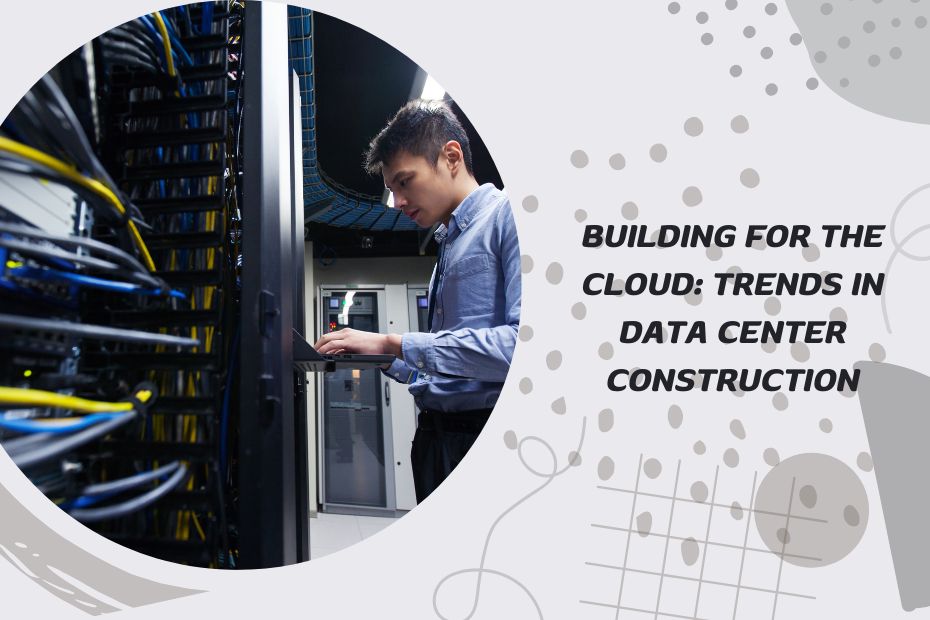
The rapid expansion of cloud computing, artificial intelligence (AI), and the Internet of Things (IoT) has transformed the way data centers are designed and built. As the digital economy continues to grow, so does the demand for high-capacity, efficient, and sustainable data centers. This article delves into the key trends shaping data center construction in 2024 and beyond, exploring how technology, sustainability, and regional factors are influencing this critical infrastructure.
Hyperscale and Edge Data Centers on the Rise
The global shift toward cloud-based infrastructure has led to a surge in the construction of hyperscale data centers. These massive facilities support the vast storage and computing needs of tech giants like Amazon, Google, and Microsoft. According to industry predictions, hyperscale data centers are set to double in capacity over the next few years to meet the increasing demand for cloud services and AI-based applications.
At the same time, edge data centers are gaining popularity. These smaller, localized facilities reduce latency by processing data closer to the source, making them ideal for applications such as autonomous vehicles, real-time analytics, and IoT devices. Edge data centers are becoming more common in suburban and rural areas, helping to diversify data center locations.
Energy Efficiency and Sustainability
Sustainability is now a cornerstone of data center design. Given the immense energy consumption of these facilities, companies are prioritizing energy efficiency and integrating renewable energy sources into their operations. In regions like Northern Europe, where access to renewable energy is abundant, data centers are increasingly powered by wind, hydro, and solar energy.
In addition to renewable energy, innovations like liquid cooling systems are being introduced to improve energy efficiency. Traditional air cooling is being replaced by more efficient liquid cooling, which reduces both energy consumption and the environmental impact of running high-performance computing equipment.
Modular and Prefabricated Construction
To keep up with the growing demand for data centers, the construction industry is adopting modular and prefabricated designs. This approach allows for faster build times and scalability. Modular data centers are constructed off-site and then assembled on location, reducing construction delays and costs. These modular designs are particularly beneficial in fast-growing cloud regions like Virginia and Texas, where the demand for new data center capacity is exploding.
Prefabrication is about speed and flexibility. It allows for easy expansion as more capacity is needed, making it an attractive option for cloud service providers that need to scale operations quickly to accommodate new customers.
Data Centers Moving to Power Sources
A growing trend in North America is the strategic positioning of data centers near power sources rather than trying to bring power to the data center. Locations with access to affordable energy, such as Texas, Iowa, and Virginia, are seeing a boom in data center construction due to their proximity to stable power grids. This shift helps mitigate energy costs, which are a significant portion of a data center’s operational expenses.
Regions like the Nordics are also benefiting from this trend, as they offer abundant renewable energy at lower costs. As energy efficiency becomes more critical, this strategy of situating data centers near power sources is likely to continue.
AI and High-Density Computing
The rise of AI and machine learning is driving demand for high-density computing within data centers. AI workloads require more powerful and efficient hardware, which, in turn, impacts data center design. Companies are now incorporating specialized servers and storage solutions capable of handling massive amounts of data and performing complex calculations at scale.
In response to these needs, data centers are being equipped with AI-driven infrastructure, which can optimize everything from energy consumption to server performance. This trend is reshaping how data centers are built and operated, with a focus on supporting advanced computing technologies.
Security and Resilience
As the cloud infrastructure expands, so does the need for robust security and resilience measures in data center construction. Data centers are increasingly incorporating security features, such as biometric access controls, multiple layers of encryption, and disaster recovery systems, to protect sensitive data.
Additionally, there is an emphasis on resilience against natural disasters and power outages. Many data centers are built with redundant power supplies and backup generators to ensure uninterrupted operations. In regions prone to natural disasters, such as California and Florida, data center designs are adapting to withstand earthquakes, hurricanes, and floods.
Global Expansion into New Markets
Data center construction is no longer limited to traditional tech hubs. Global expansion into underserved markets is gaining momentum, driven by increasing demand for cloud services in emerging regions like Latin America and Southeast Asia. These regions are attractive due to lower land costs, growing internet penetration, and the need for localized data processing to support regional cloud services.
Cities like Rio de Janeiro, Bogota, and Bangkok are emerging as new data center hubs, offering access to growing markets while alleviating the pressure on established hubs like Singapore and Virginia. As the digital economy continues to expand, data center construction is expected to follow suit in these new territories.
Key Trends in Data Center Construction
- Hyperscale and edge data centers: Rising demand for large-scale cloud services and real-time analytics.
- Energy efficiency: Use of renewable energy and liquid cooling to reduce environmental impact.
- Modular construction: Prefabricated designs for faster build times and scalability.
In Conclusion
The future of data center construction is being shaped by technological innovation, sustainability, and global expansion. From the rise of hyperscale and edge data centers to the adoption of AI-driven infrastructure, these trends are revolutionizing how data centers are built and operated. As companies continue to rely on cloud-based services, the demand for efficient, sustainable, and secure data centers will only increase. By staying ahead of these trends, the data center industry is well-positioned to meet the growing needs of a digital-first world.

Barry Bekkedam is an entrepreneur and finance executive focused on investment management and advisory. A former Villanova standout and member of Canada’s men’s national basketball team, he now leads ventures in asset management and philanthropy, including the Barry Bekkedam Foundation supporting education and community development.