
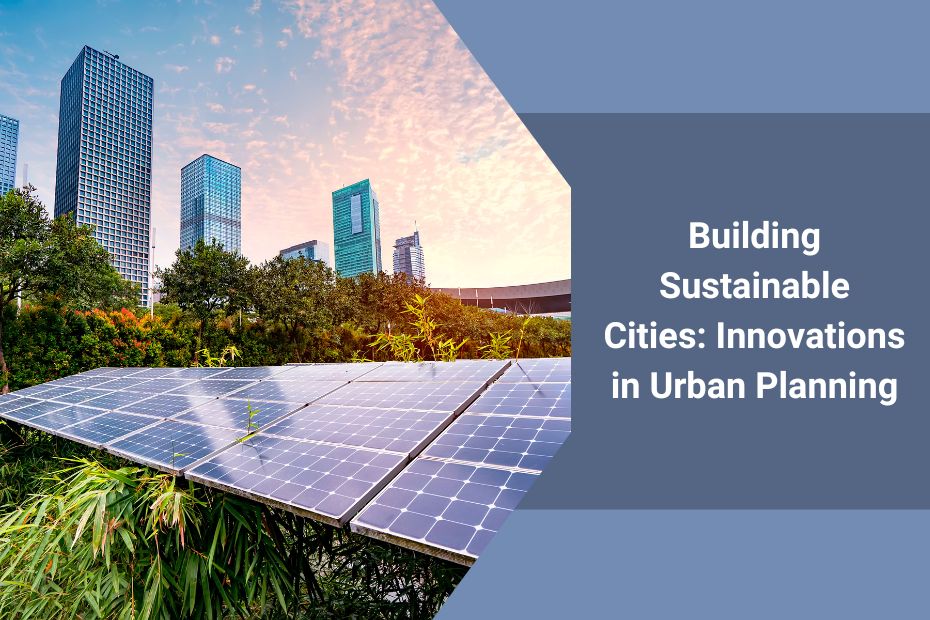
Cities are expanding rapidly, and traditional urban planning methods can no longer keep up with the environmental and social challenges that come with growth. The demand for smarter, greener, and more efficient cities is stronger than ever. From my work in urban planning, I’ve seen firsthand how innovative solutions are reshaping cities to be more sustainable and resilient. Whether it’s integrating green infrastructure, leveraging smart technology, or designing carbon-neutral neighborhoods, cities that adopt these strategies will thrive in the future. The question is no longer whether urban planning should change—it’s how fast cities can implement the innovations needed to support both people and the planet.
Integrating Green Infrastructure and Water Management
One of the most effective ways cities can improve sustainability is by incorporating green infrastructure. I’ve worked on projects where parks, tree-lined streets, and rooftop gardens don’t just add aesthetic value—they reduce air pollution, provide shade, and help regulate urban temperatures. These green spaces also play a key role in mental well-being, offering people a natural escape in the middle of busy city life.
Water management is another critical aspect. Cities that struggle with flooding are turning to “sponge city” concepts, where urban landscapes are designed to absorb and manage rainwater naturally. Instead of relying on expensive drainage systems, permeable pavements, wetlands, and green roofs allow water to be stored and slowly released. I’ve seen this work in cities like Berlin and Shenzhen, where stormwater is no longer a problem but a resource that’s used efficiently.
Smart Technology is Making Cities More Efficient
Technology is one of the biggest drivers of sustainable urban planning. Cities that embrace smart technology can optimize everything from energy use to transportation. I’ve worked with smart traffic systems that use AI to monitor congestion and adjust signals in real time. This reduces emissions by cutting down idle time at intersections, making city travel smoother and more fuel-efficient.
Smart grids are another game-changer. By analyzing energy demand and distributing power efficiently, cities can prevent energy waste and lower electricity costs. Many places are now incorporating IoT sensors to track energy consumption in real time, helping businesses and households cut unnecessary usage. This level of efficiency is only possible with AI and automation, and the results speak for themselves.
Urban Agriculture is Changing How Cities Feed Themselves
Cities consume enormous amounts of food, and traditional supply chains are inefficient and wasteful. I’ve seen how urban agriculture is transforming food systems by bringing production closer to where people live. Rooftop farms, hydroponic greenhouses, and vertical gardens allow fresh produce to be grown within city limits, reducing transportation emissions and food waste.
Community-driven projects have been some of the most successful. In several cities, underutilized spaces are being turned into urban farms where local residents grow their own food. This isn’t just about sustainability—it’s about food security and creating stronger communities. The more cities invest in local food production, the less they’ll rely on supply chains that are vulnerable to disruption.
Carbon-Neutral Neighborhoods are Becoming a Reality
One of the most exciting developments in urban planning is the rise of carbon-neutral neighborhoods. I’ve worked with architects and developers who are designing entire districts to operate on renewable energy and maximize energy efficiency. Bahnstadt in Heidelberg, Germany, is a perfect example—this neighborhood is powered entirely by renewable energy, and its buildings use 80% less energy than traditional structures.
The key to making these neighborhoods work is a combination of energy-efficient building materials, solar panels, and smart heating systems. More cities are adopting similar models, proving that it’s possible to design communities that generate as much energy as they consume. The challenge now is scaling these solutions to make them the norm rather than the exception.
Regenerative Design is Going Beyond Sustainability
While sustainability focuses on reducing harm, regenerative design takes things further by restoring and improving the natural environment. I’ve seen projects where buildings don’t just use less energy—they generate more than they consume. Green roofs that support pollinators, wastewater recycling systems, and biodiversity-friendly urban spaces are all part of this approach.
This shift is important because cities have historically been a drain on natural resources. Regenerative design turns that idea on its head, making cities part of the environmental solution instead of the problem. By building in ways that give back to nature, cities can undo some of the environmental damage caused by decades of unsustainable growth.
Policy and Governance Drive Long-Term Sustainability
Innovation alone isn’t enough—policy and governance are what ensure these changes last. Governments that support sustainability through strong policies and incentives see the best results. I’ve worked with cities that offer tax breaks for green buildings, subsidies for solar panels, and strict waste management regulations. These efforts make a difference, pushing businesses and residents toward more responsible choices.
Collaboration is another key factor. When governments, businesses, and local communities work together, sustainable urban planning becomes much more effective. Initiatives like the Global Peer Learning Series are helping cities share knowledge and best practices, making sustainability a shared goal rather than an isolated effort.
Key Innovations in Sustainable Urban Planning
- Green infrastructure improves air quality and reduces heat.
- Sponge city designs manage stormwater efficiently.
- Smart technology optimizes traffic and energy use.
- Urban agriculture boosts local food production.
- Carbon-neutral neighborhoods use renewable energy.
- Regenerative design restores ecosystems in cities.
- Strong policies drive long-term sustainability efforts.
In Conclusion
The future of cities depends on how well they integrate these innovations. The shift toward sustainability is no longer optional—it’s an urgent priority. Cities that invest in green infrastructure, smart technology, and regenerative design will be the ones that thrive in the coming decades. The solutions exist, and it’s time to implement them at scale. The question isn’t whether cities will change—it’s how fast they’ll embrace the innovations that will define urban life for future generations.
It looks like you’ve shared an insightful article on sustainable urban planning. If you’re looking to connect with more content on this topic, check out my Pinterest for more ideas and inspiration.

Barry Bekkedam is an entrepreneur and finance executive focused on investment management and advisory. A former Villanova standout and member of Canada’s men’s national basketball team, he now leads ventures in asset management and philanthropy, including the Barry Bekkedam Foundation supporting education and community development.