
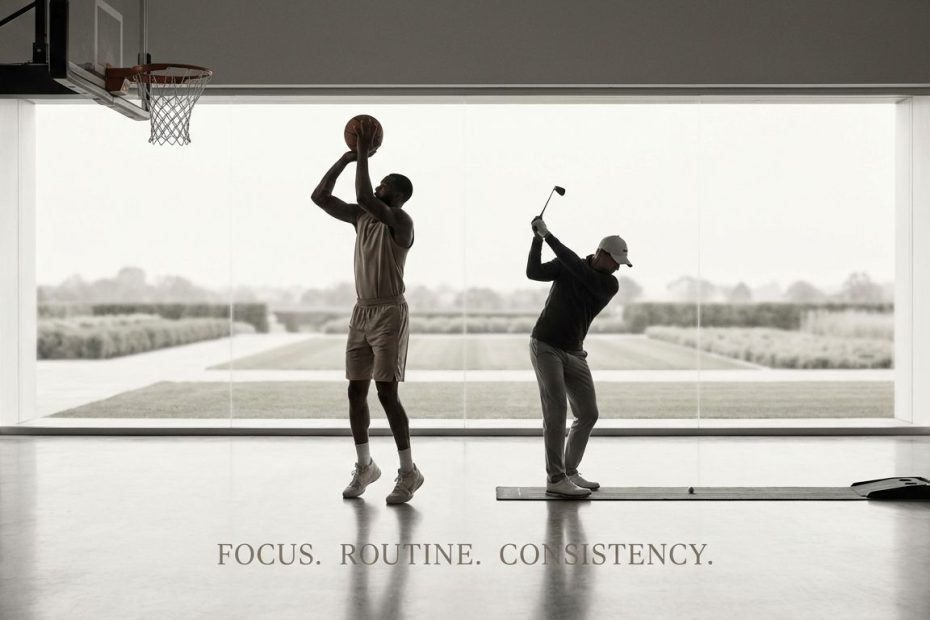
Golf drills can improve your basketball game by sharpening the skills that sit underneath shooting and decision-making: visual focus, repeatable tempo, emotional reset, and lower-body force transfer. When you train golf with intent, you build a steadier “performance system” that shows up at the free-throw line, on pull-ups, and late in games.
This guide breaks down exactly where the carryover is real, where it is limited, and how to use specific putting and swing drills to upgrade basketball outcomes. You’ll get six practical sections built around real search questions, plus a simple weekly plan that blends golf micro-sessions with basketball work without messing up your shot.
Can Golf Actually Improve Basketball Shooting, Or Is That A Myth?
Golf will not rebuild your jump-shot mechanics, and it will not teach you to score through contact. What it can do is improve the “repeatability layer” that supports consistent shooting, especially on set shots where routine, focus, and pace decide outcomes. A good golf practice block forces you to control attention, commit to a target, and execute on a single intention without the constant rhythm of live play, which translates cleanly to free throws and catch-and-shoot work.
The most valuable transfer is the way golf punishes mental drift. A slight change in aim, tempo, or commitment shows up right away on the green, and that immediate feedback trains you to notice small execution leaks before they become slumps. On the court, that turns into tighter shot routines, fewer “aim changes” mid-release, and better composure after a miss. This is not theory, it is the same performance behavior: pick a plan, see it clearly, then execute without noise.
Transfer has limits, and those limits matter if you want real progress. Golf does not train your basketball release pattern, your arc, your ability to shoot off a hard stop, or your timing against a closeout. Basketball still owns those pieces, and any cross-training that replaces basketball reps with golf reps will stall development. Golf earns its place when it strengthens what basketball practice often skips: calm precision under pressure, a stable visual process, and a consistent tempo you can reproduce when legs get heavy.
What Golf Putting Drills Help With Basketball Free Throws And Focus?
Start with putting drills that demand start-line control and distance control, since free throws break down the same way: the ball starts off-line or arrives long/short when tempo changes. A proven option is the tee “gate” setup used in putting practice, which makes you roll the ball through a narrow channel so the face returns square and the start line stays honest. The PGA of America’s lag-putting work around tee-gate practice emphasizes speed control and reducing three-putts, and that same structure maps well to free-throw pace and touch.
Use the golf drill to build a transferable routine rather than chasing makes. In putting, the goal on long putts is often to leave the ball close, not to hole it, and that mindset protects you from getting “result-hungry.” On free throws, that becomes a repeatable routine that locks in the same breath, the same gaze, and the same tempo regardless of the last possession. When you treat each rep as a process rep, you stop riding hot streaks and cold streaks.
Carry one specific golf habit straight to the stripe: pick a precise entry reference, then commit. Golf instruction commonly teaches selecting a specific entry point on the hole to match the read, then running the stroke to that spot. Translating that to basketball means selecting a consistent rim reference you will use every time, then keeping it for the whole routine. Sean Foley’s three-step putting routine leans on choosing an entry point and managing vision so the hands react to the right information, which mirrors what disciplined free-throw shooters do when the gym gets loud.
Does A Golf Swing Improve Basketball Footwork, Balance, Or Power?
A full golf swing is a lower-body sequencing lesson disguised as a skill sport. Good swings teach you to load, brace, rotate, and keep posture while force moves from the ground through the hips and torso. That same “ground-up” control is what stabilizes your pull-up, your step-back, and your deceleration into a shot when you have to stop fast without spraying your feet. When that base is clean, the upper body stops improvising, and your shot becomes more repeatable under fatigue.
Biomechanics research in skilled golfers shows measurable links between foot-ground interaction variables and clubhead speed, highlighting how much performance comes from how you apply force into the ground and shift load effectively. In one study of highly skilled male golfers, several peak force and moment parameters correlated with maximum clubhead speed, and loading onto the lead foot at key moments was emphasized as critical for generating peak moments. That “lead-side bracing” pattern is the same stability you need when you plant to elevate into a jumper or absorb contact on a drive.
Another angle that matters for basketball is that golf is not only vertical force. Research on horizontal ground reaction forces in the golf swing argues that horizontal forces should not be ignored due to their lever arms and contribution to the overall motor moment that helps accelerate the club. When you coach basketball footwork well, the same truth shows up: great shooters and finishers do not only “jump,” they manage horizontal braking and controlled drift. Training slow, technical swings or step-and-brace swing rehearsals builds awareness of how feet, knees, and hips coordinate, which improves your ability to stop on balance and shoot on line.
What “Quiet Eye” Target-Focus Tips From Golf Translate To Basketball?
If the goal is to shoot better under pressure, the most valuable crossover is your visual routine. Quiet-eye training research in basketball field-goal shooting reports that teaching athletes to adopt gaze behaviors associated with elite shooters can improve accuracy compared with technical instruction alone, with effects shaped by skill level and pressure. The practical takeaway is straightforward: your eyes must lock onto a specific target location early enough, and stay stable long enough, to let your motor system organize the shot.
Golf putting instruction reinforces the same discipline: “quiet vision,” pick an exact entry target, then stroke without letting your eyes chase motion. Foley describes putting as a mix of vision and feel, and lays out a routine that narrows visual inputs so the hands stop reacting to extra information. That is directly relevant to basketball players who get jittery at the line, stare at the rim without a specific aim, then “steer” the release. When you narrow the visual job, you reduce steering and increase consistency.
Implement this on-court with one rule: your eyes finish the routine before your hands start the shot. Set your feet, set your breath, lock your gaze on a chosen rim reference, then let the shot go without changing the target. This cleans up late aim shifts that cause misses left-right even when the form looks fine on video. It also improves late-game shooting because the visual routine is portable when legs and heart rate rise.
Which Golf Drills Best Improve Hand-Eye Coordination For Basketball?
Golf improves coordination when you use drills that force precision under control, not full-speed swings that create fatigue. Short putting and basic chipping place a premium on face angle control, centered contact, and stable tempo, which trains fine motor control tied to touch. That can support softer finishes, steadier floaters, and better feel on short-range shots where over-muscling ruins the release.
Vision skills are a major part of the story. Sports-vision guidance for golf highlights concentration, depth perception, eye-hand coordination, visual fixation, and tracking as essential components for performance. Those same visual-motor skills help basketball players pick small targets, maintain aim stability, and track the ball cleanly through release without rushing. When visual fixation improves, decision-making also stabilizes since the brain stops jumping between cues.
Use a simple process-based block: roll putts through a tight “gate” to train start line, then roll longer putts to train speed. The gate makes you honest about face control, and long putts make you honest about tempo. When you take that to basketball, you will notice fewer “random” misses where the shot feels fine but drifts, because the visual and timing system is more disciplined.
What’s A Simple Weekly Cross-Training Plan: Golf Drills Plus Basketball Workouts?
A clean plan keeps golf sessions short, precise, and placed so they do not interfere with shot mechanics or lifting. Two to three golf micro-sessions per week, 10–20 minutes each, fit well after basketball skill work or on light days. The point is neural quality, not conditioning, and that means stopping before forearms or wrists get tired. When fatigue shows up, your basketball shot often pays the price.
Two days per week can focus on putting: start-line work through a tee gate, then lag putting to a distance window. The tee-gate drill enforces start line and face control, lag putting reinforces speed control and distance calibration, and that pairing maps well to free-throw line discipline. The PGA’s lag-putting guidance centers on distance control and reducing three-putts, which is the same goal as reducing short/long misses at the stripe.
One day per week can focus on lower-body sequencing: slow-motion swing rehearsals that emphasize load, brace, rotate, finish in balance. Keep it controlled, keep it rhythmic, and keep reps clean. Then step onto the court and run 10–15 minutes of footwork-linked shooting: 1–2 stops, hop gathers, pull-ups after deceleration, then close with free throws using the same visual routine trained in putting. Biomechanics research showing the importance of force and moments at the feet supports treating ground interaction as a trainable skill, not a talent.
Can Golf Improve Basketball Shooting?
- Yes, via better focus, routine, tempo, and start-line control
- Best carryover: putting drills, quiet-eye style gaze, distance control
- Limit: golf won’t fix jump-shot mechanics
Build A Sharper Shooter’s Routine, Then Pressure-Test It
Golf drills upgrade basketball performance when they train the same performance inputs your best games already have: stable gaze, clear target choice, repeatable tempo, and a calm reset after misses. Putting routines that narrow vision and reinforce start line can tighten free throws, and lag-putting style distance control can steady touch when fatigue hits. Swing mechanics and ground-force awareness can also improve your ability to stop, brace, and rise on balance, which supports cleaner pull-ups. Keep the sessions short, track what transfers, and pressure-test the routine on-court with free throws and deceleration shooting so the gains show up when it counts.
References
- Hoop Heads Podcast: The Mental Benefits of Playing Golf for Basketball Players
- Golf Digest: Sean Foley, Three Steps To Better Putting
- PGA.com: Improve Your Lag Putting With This Helpful Tee Gate Drill
- PubMed: Effects of the Golfer-Ground Interaction on Clubhead Speed in Skilled Male Golfers
- MDPI: Effect of Horizontal Ground Reaction Forces during the Golf Swing
- ScienceDirect: Quiet Eye Training Improves Accuracy in Basketball Field Goal Shooting
- Optometrists.org: Vision for Golf

Barry Bekkedam is an entrepreneur and finance executive focused on investment management and advisory. A former Villanova standout and member of Canada’s men’s national basketball team, he now leads ventures in asset management and philanthropy, including the Barry Bekkedam Foundation supporting education and community development.