
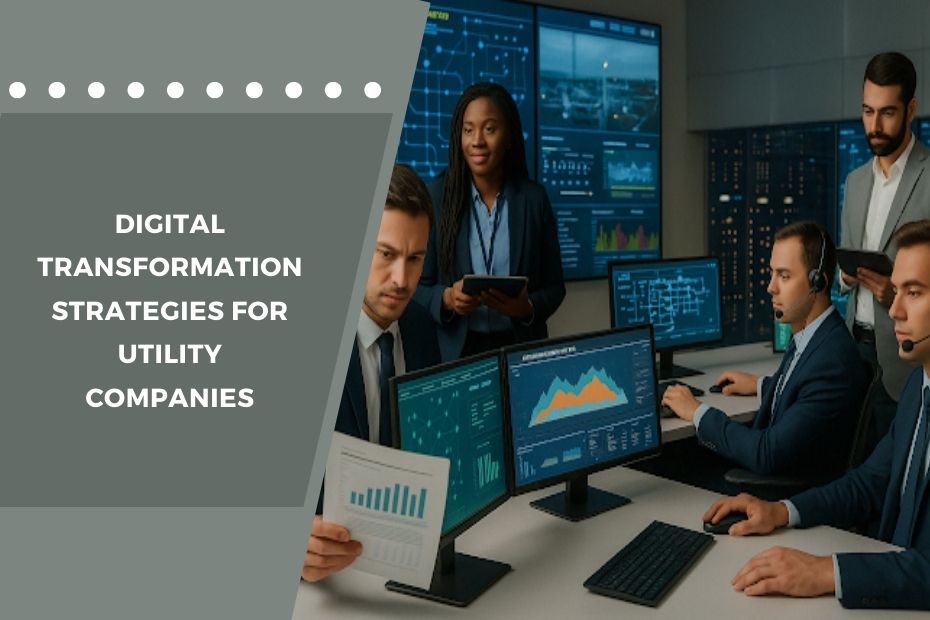
As someone leading digital initiatives in a utility company, you’re facing a clear mandate—make operations smarter, cleaner, and more responsive to customer demands. Digital transformation isn’t about chasing trends. It’s about survival in a market where energy efficiency, renewable integration, and customer control are no longer differentiators but expectations. From smart grids and predictive analytics to cybersecurity and automation, the shift to digital touches every layer of your infrastructure and customer interface. What matters now is strategy—choosing tools that work, building a team that can adapt, and setting your company up to be as agile as the technologies you’re adopting.
Use Smart Grid Technologies to Modernize Infrastructure
You can’t talk about digital transformation without smart grids. These systems give you visibility across your network—real-time feedback on consumption, outages, voltage fluctuations, and distribution patterns. You replace guesswork with live data and turn passive infrastructure into intelligent systems that communicate.
When smart meters and automated controls are properly deployed, you’re able to predict overloads, reroute power efficiently, and reduce downtime. That reduces operational costs and improves customer satisfaction. And because smart grids integrate well with decentralized energy sources like rooftop solar and EV charging stations, you’re future-proofing your distribution model.
Apply Data Analytics to Predict, Optimize, and Automate
Digital transformation thrives on data—but only if you’re set up to use it. Most utilities already generate massive volumes of data from meters, sensors, and customer interactions. The difference lies in your ability to act on it. When you apply machine learning or predictive analytics to usage patterns, weather models, or grid performance, you begin forecasting instead of reacting.
That shift gives you early warnings on equipment failure, identifies energy theft, and helps forecast peak load windows down to individual neighborhoods. You can also automate distribution and load balancing, reducing the need for manual intervention during high-demand periods. It’s not about collecting more—it’s about making smarter decisions with what you already have.
Strengthen Customer Experience with Digital Tools
Your customers expect the same digital convenience they get from banks and retail apps. You can’t afford to treat utility services like legacy operations anymore. Self-service portals, mobile apps, chatbots, and real-time alerts are no longer value-adds—they’re requirements.
By giving your customers tools to track their usage, set alerts, pay bills, or report outages online, you empower them and reduce the burden on your call centers. You also build trust. Transparency about usage and cost builds loyalty, especially when paired with educational content on reducing consumption or choosing renewable options.
Integrate Renewable Energy into Your Distribution Network
If you’re still treating renewable integration as a compliance box, you’re falling behind. As grid operators and service providers, your role now includes actively managing decentralized energy sources. That means solar, wind, battery storage, and even customer-generated energy fed back into the grid.
Digital transformation helps you map, forecast, and absorb variable energy loads without compromising grid stability. Advanced distribution management systems (ADMS) and virtual power plant platforms let you treat these inputs like any other resource—optimized and scheduled. You also create new revenue opportunities by enabling demand response programs and green energy pricing models.
Implement Advanced Metering Infrastructure (AMI)
Advanced metering is the backbone of everything else you’re trying to do. Without AMI, you can’t support real-time monitoring, automated billing, or outage diagnostics at the customer level. But when deployed correctly, smart meters go beyond measurement—they become communication hubs.
With AMI in place, you’re no longer reliant on monthly reads or estimates. You gain interval data that fuels demand-side management, dynamic pricing, and customer education. Plus, you’re able to detect anomalies like leaks or line loss instantly, allowing for faster response and better resource allocation.
Prioritize Cybersecurity Across All Digital Layers
Digital upgrades increase exposure to risk. As your grid becomes more connected, it also becomes more vulnerable. Cyberattacks on energy infrastructure are not hypothetical—they’re happening. From ransomware to SCADA manipulation, the threats are growing in frequency and sophistication.
Cybersecurity can’t be a compliance task—it has to be embedded in your architecture. This means adopting zero-trust models, multi-factor authentication, continuous monitoring, and penetration testing. You also need to educate your staff, from field workers to engineers, because your defenses are only as strong as your most vulnerable login. Every sensor, node, or control device is a potential access point.
Build a Digital-First Culture and Workforce
Technology won’t fix anything if your people can’t use it—or don’t trust it. The success of any digital transformation effort depends on your workforce’s ability to adapt and engage with new systems. That requires a shift in culture, not just hardware.
You need to invest in training programs, cross-functional collaboration, and leadership that supports experimentation. Bring in IT specialists with utility experience, but also upskill your legacy staff to work with new tools. The more involved your teams are in shaping digital strategies, the more likely they are to adopt them successfully. A digital-first utility isn’t defined by tools—it’s defined by people who know how to use them to solve problems faster.
Key Digital Strategies for Utilities
- Deploy smart grids for real-time control
- Use analytics for predictive decisions
- Offer customer-facing digital tools
- Integrate distributed energy systems
- Roll out advanced metering infrastructure
- Secure systems with end-to-end cybersecurity
- Upskill teams for digital operations
In Conclusion
Digital transformation in utilities isn’t about a single solution—it’s an ecosystem shift. It touches your grid, your customers, your business model, and your internal operations. Whether you’re upgrading legacy systems, launching renewable programs, or simply trying to cut outage times, the right digital strategies help you respond faster and work smarter. It starts with data, scales through smart infrastructure, and succeeds when your people and systems are aligned. Keep your focus on functionality over flash, and you’ll position your company to thrive in a highly competitive, customer-driven energy market.
Explore more insights on digital innovation in the utility sector at mystrikingly.

Barry Bekkedam is an entrepreneur and finance executive focused on investment management and advisory. A former Villanova standout and member of Canada’s men’s national basketball team, he now leads ventures in asset management and philanthropy, including the Barry Bekkedam Foundation supporting education and community development.