
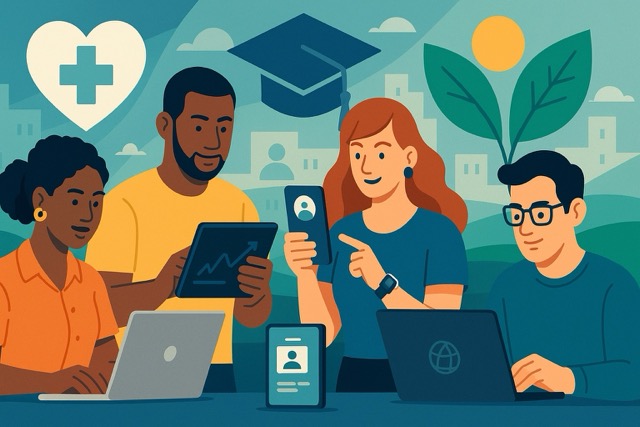
You’re seeing it everywhere—entrepreneurs using technology not just to build wealth, but to solve real social problems. From digital inclusion to clean energy, tech is being harnessed to create businesses that deliver value beyond profit. This shift is no accident. You’re operating in a world where access, equality, and environmental responsibility are critical to long-term success. Whether you’re looking to launch your own mission-driven startup or support one as a partner, this article walks you through how entrepreneurs are putting technology to work for social good—with examples, tactics, and trends that are reshaping how innovation meets humanity.
Building Accessible Healthcare With AI and Mobile Tech
If you want to solve real-world problems, healthcare is a great place to start—and entrepreneurs are using AI to do just that. You’ve probably heard of companies like Cera, a UK-based startup using machine learning to improve home care by predicting patient deterioration through mobile data. By replacing manual monitoring with AI-powered alerts, they’ve reduced hospitalizations and improved patient outcomes while relieving pressure on healthcare systems.
You’re seeing this model take off globally. In Kenya, Ilara Health uses diagnostic tools integrated with smartphones to bring affordable lab testing to underserved clinics. Instead of costly equipment, they provide portable, tech-enabled devices that plug into basic Android phones. These aren’t just clever solutions—they’re scalable, data-driven, and built for regions where traditional healthcare infrastructure is limited. If you’re considering where to direct your energy, this space is not only urgent but wide open for innovation.
Advancing Education Through Mobile Platforms
Education gaps are among the toughest barriers in developing regions, and mobile platforms are helping bridge that gap. Entrepreneurs are launching edtech products that deliver lessons via SMS, voice, or low-bandwidth apps. You don’t need a high-end device or Wi-Fi to learn—just a basic phone.
Take Eneza Education, which provides curriculum-aligned content through SMS and USSD in rural Africa. They’ve reached over 10 million users, many of whom have no other access to formal learning tools. This model proves that you can reach scale without relying on flashy apps or expensive devices.
You’re also seeing gamification in this space. Platforms like Kide Science use storytelling-based digital tools to teach scientific thinking to young children, showing how imagination and interactivity can build cognitive skills. These tools are changing what education looks like for students worldwide—and opening up massive opportunities for entrepreneurs like you to make a measurable difference.
Digital Inclusion for Rural Economies
Technology is only useful if people can access and afford it. That’s why digital inclusion—bringing connectivity, financial tools, and digital literacy to rural and underserved areas—is one of the most valuable social missions you can pursue.
One standout is Tech Herfrica, a Nigerian initiative helping women farmers access digital marketplaces, pricing data, and business tools. Many of these entrepreneurs lacked smartphones or basic training in tech use. By providing device subsidies, digital education, and access to e-commerce platforms, Tech Herfrica is helping women scale their businesses and break out of localized trade limitations.
This type of work isn’t just altruism—it’s economic expansion. When you empower people to participate in the digital economy, you’re opening new markets and revenue streams. Whether it’s a peer-to-peer lending platform or a basic mobile banking service, technology can become the bridge between survival and sustainability for small rural businesses.
Environmental Solutions Through Clean Tech Startups
Climate-driven innovation is gaining serious traction, and it’s not limited to billion-dollar carbon offset companies. Entrepreneurs are building scalable tech businesses that tackle plastic waste, deforestation, and energy inefficiency at the ground level.
Consider The Plastic Flamingo, a startup turning marine plastic waste into building materials in Southeast Asia. By collecting and recycling plastics that would otherwise pollute coastlines, they’re reducing environmental harm and providing low-cost construction materials to local communities.
You also have startups like Ampd Energy, which develops lithium-ion battery systems to replace diesel generators on construction sites. Their systems are already slashing carbon emissions in major cities across Asia. This is proof that clean energy doesn’t need to wait for giant infrastructure changes. As an entrepreneur, you can solve hyperlocal environmental problems with targeted solutions that scale—and generate meaningful returns.
Using Blockchain for Transparency and Empowerment
Blockchain isn’t just about cryptocurrency. You can use it to improve transparency in sectors like agriculture, supply chain, and humanitarian aid. That’s exactly what startups like Provenance and AgUnity are doing. Provenance allows consumers to trace the origins of products—from farm to shelf—while AgUnity helps farmers record transactions on the blockchain to build financial histories and access credit.
In regions where paperwork gets lost, fraud is common, and banks are out of reach, having a secure, immutable record of income can be a game-changer. If you’re exploring tech for social good, blockchain gives you a powerful tool to provide trust where it’s often missing. Whether you’re focused on ethical sourcing or equitable finance, these applications put power directly into the hands of people who need it.
Leveraging AI for Public Safety and Crisis Response
Entrepreneurs are also using AI to address public safety and emergency response. One Concern, a California-based startup, uses predictive AI modeling to help cities prepare for natural disasters. Their tech helps officials simulate the impact of earthquakes, floods, and fires to allocate resources more effectively and reduce loss of life.
You’ve also got solutions like Disaster Tech, which integrates AI, IoT, and geospatial analytics to support emergency response teams with real-time situational awareness. These are areas where timing is everything, and having accurate data in the right hands can save thousands of lives.
If you’re in a region prone to natural disasters—or you’ve experienced them firsthand—you understand the gaps in preparedness. Tech-driven solutions in this space aren’t just smart business ideas. They offer purpose, utility, and a real shot at scaling globally as governments look for smarter ways to protect communities.
Social Commerce and Micro-Entrepreneurship
The rise of mobile commerce has opened the door for small sellers to build businesses from their phones. Platforms like Meesho in India are turning everyday people into product resellers using nothing but WhatsApp and a smartphone. These platforms don’t require inventory or capital—just connectivity and effort.
This type of micro-entrepreneurship is critical in regions with limited employment options. You empower individuals to generate income, often for the first time, through tools they already understand. By building apps that simplify product sourcing, pricing, and delivery, you can lower the barrier to entrepreneurship and give more people a stake in the digital economy.
How Entrepreneurs Use Tech for Social Good
- Mobile apps bring education to underserved communities
- AI tools power smarter healthcare and emergency response
- Blockchain improves financial access and supply transparency
- Clean tech startups reduce pollution and expand energy access
- Digital inclusion platforms support small businesses and farmers
In Conclusion
If you’re serious about using your startup to do more than just turn a profit, you’re not alone—and you’re not limited. Entrepreneurs across the globe are already proving that technology can serve communities, close gaps, and solve long-standing problems. Whether it’s through mobile diagnostics, solar-powered tools, or AI-led safety systems, your innovation can scale faster and work smarter when it’s built on purpose. Technology is no longer separate from social change—it’s a powerful engine for it, and your ability to harness it is what will define your success moving forward.
Eager to connect with a professional who champions impactful entrepreneurship and business growth? You can explore my professional background and any associated ventures on Crunchbase.

Barry Bekkedam is an entrepreneur and finance executive focused on investment management and advisory. A former Villanova standout and member of Canada’s men’s national basketball team, he now leads ventures in asset management and philanthropy, including the Barry Bekkedam Foundation supporting education and community development.