
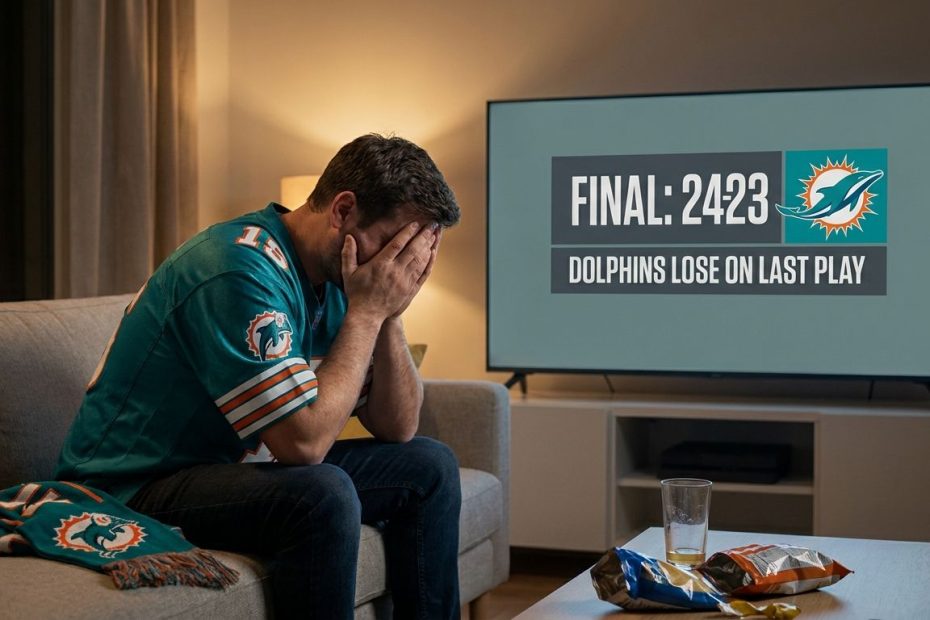
A Dolphins heartbreaker can hit you like a real emotional punch because your brain treats team identity, hope, and social connection as something that matters. You are not overreacting when a last-second collapse wrecks your mood, but you do need a better recovery plan than replaying the final drive all night.
If you care hard, you need tools that work in real time. This article shows you why these losses sting so much, what your mind is doing right after the game, and how to reset without pretending you never cared in the first place.
Why Does A Dolphins Heartbreaker Feel Personal?
When you invest in a team year after year, you are not just watching a game. You are attaching part of your identity to a group, a routine, a city, and a set of expectations that live in your weekly life. That is why a crushing loss does not feel like random entertainment going wrong. It feels like something was taken from you.
The pain gets sharper when the game gives you maximum hope first. A normal loss is frustrating, but a late collapse or final-drive failure creates emotional whiplash. Your body ramps up, your attention narrows, and you start anticipating relief. Then the result flips. That swing is what makes the ending stick in your chest and replay in your head.
You also experience these moments socially. You text friends, track reactions, watch with family, post during the game, and build rituals around every snap. When the Dolphins lose in brutal fashion, the disappointment is not isolated. It spreads through your group chat, your feed, your living room, and your entire Sunday night mood.
That is why telling yourself to “just get over it” usually fails. Your reaction is tied to identity, belonging, and expectation. Once you understand that, you can stop treating your frustration like weakness and start managing it like a predictable response.
Why Do You Feel Angry, Sick, Or Numb After The Final Drive?
A heartbreaker floods you with unfinished emotional energy. You were bracing for celebration, release, vindication, maybe even relief from weeks of built-up stress. When the game flips late, all of that activation has nowhere to go. What you feel after the final whistle is often your nervous system still firing without a clean landing.
That is why some losses make you feel angry, some make you feel hollow, and some leave you pacing your kitchen in silence. Your reaction depends on what you believed was about to happen. If you were sure the team was about to close it out, the loss feels like theft. If you have seen the same script too many times, the loss can trigger dread, resignation, or that familiar “of course this happened” feeling.
Social media makes it worse. The final interception, blown coverage, missed kick, bad clock decision, or failed fourth down does not stay in the past. It gets clipped, reposted, dissected, mocked, and thrown back at you within minutes. You are no longer dealing with one painful moment. You are dealing with an endless loop of it.
Numbness is part of this too. Some fans expect rage and get silence instead. That does not mean you cared less. It can mean you hit emotional overload and your brain downshifted into protection mode. When you know these reactions are normal, you can respond with control instead of feeding the spiral.
What Is Happening To Your Fan Identity After A Brutal Loss?
Sports psychology has long shown that fans tie personal identity to team results. After wins, you naturally lean in. You say “we,” wear gear more proudly, replay highlights, and carry that extra edge in your mood. After losses, especially ugly ones, many fans pull back. You say “they,” avoid clips, stop checking commentary, and create distance fast.
This pattern has a name in classic fan research. People often bask in reflected glory after wins and cut off reflected failure after losses. You do not need the terminology to recognize the behavior. You have lived it. A victory makes the logo feel lighter on your chest. A collapse can make the same logo feel like a burden for a few hours.
That does not make you fake. It makes you human. Your self-image takes a hit when you are deeply identified with the team and the team fails in the most painful way possible. A heartbreaker is not just a loss in the standings. It dents competence, expectation, and social pride all at once.
The useful move is not pretending this identity connection does not exist. The useful move is managing how much access the result gets to the rest of your day. You can love the team without handing it full control over your sleep, your relationships, and your attention span.
What Should You Do In The First Hour After The Dolphins Lose?
The first hour matters more than most fans realize. If you let the game own that window, you usually end up doomscrolling, arguing, drinking more than you planned, and replaying every snap from the final possession. If you control that hour, your mood stabilizes faster and the loss stops spreading into the rest of your night.
Start with a physical reset. Stand up, leave the room, take a walk, shower, stretch, or clean something with your phone out of reach. You are interrupting the replay cycle before it locks in. Your goal is not to erase the disappointment. Your goal is to stop feeding it with instant repetition.
Then set a hard limit on postgame content. Pick one of these options and stick to it: no highlights for the rest of the night, one recap only, or one quick group chat exchange before logging off. Most fans get trapped because they keep chasing explanation when what they really need is decompression. Analysis feels productive, but in that first hour it often turns into emotional self-harm.
You also need a basic rule for alcohol and impulsive posting. A bad loss plus public reaction plus lowered inhibition is a terrible combination. If you know heartbreak games push your buttons, decide your limit before kickoff and protect yourself from being the version of you that sends five furious texts and wakes up still irritated.
How Do You Stop Replaying The Last Drive Over And Over?
You stop replaying it by breaking the trigger loop, not by arguing with yourself. Telling yourself to stop thinking about the final drive rarely works. Removing the cues works better. That means muting team keywords, turning off sports alerts, stepping away from highlight feeds, and refusing to rewatch the same collapse from six camera angles.
Your brain wants closure, and replaying the final moments gives you the illusion of control. You think one more look will explain it, settle it, or make it feel less absurd. Most of the time it does the opposite. It keeps your body activated and deepens the emotional groove. You are rehearsing frustration, not solving anything.
Replace the replay with a task that requires light attention. Fold laundry, prep tomorrow’s lunch, take out the trash, organize your desk, wash dishes, or read ten pages of a book. These are not glamorous solutions, but they work because they redirect your attention into something concrete and low stakes. Your mind needs a new object to hold.
If you still want to talk about the game, do it with structure. Send one message to a friend, say it was brutal, name the play that broke you, then close the app. Venting without limits often stretches the pain. Short, contained processing gives you the release without turning the loss into a four-hour event.
Is It Normal To Care This Much About A Team?
Yes, it is normal to care a lot. Sports fandom gives you routine, community, memory, and emotional stakes. It connects you to people and places, and it gives your week a rhythm that many fans value more than they admit. Caring is not the problem. The problem starts when the result controls your behavior long after the game ends.
You should pay attention if losses change how you talk to people, ruin your sleep, derail your workday, or leave you stuck in anger that spills into unrelated parts of life. That is your signal to build stronger guardrails. The team can matter to you without getting unlimited access to your mood and reactions.
There is also a difference between healthy fan attachment and overidentification. If your bond with the team starts replacing real connection, or if you feel trapped in a cycle of obsession, withdrawal, and online conflict, you need to reset your habits. Caring deeply is fine. Letting a franchise dictate your emotional stability is not.
The healthiest fans are not the fans who feel nothing. They are the fans who know how to recover. They enjoy the highs, absorb the lows, and keep the game in its proper place once the clock hits zero.
What Coping Strategies Actually Help After A Heartbreaking Loss?
The best coping tools are simple, repeatable, and boring in the best way. You need body reset, social support, controlled distance, and reframing. Those four elements work better than rage-posting, marathon highlight review, or turning the loss into a full-night identity crisis.
Body reset comes first because emotion lives in the body before it becomes a clean thought. Walk, breathe, shower, stretch, eat real food, drink water, and get out of the chair where you watched the collapse. That physical shift reduces the intensity of the emotional loop. You are giving your system a chance to come down.
Social support matters, but keep it clean. Talk to people who understand the pain without turning it into a courtroom. A short exchange with a friend who gets it can settle you. Endless blame sessions usually keep you angry. Choose company that helps you process, not company that performs outrage.
Controlled distance is one of the most useful tools you have. Skip sports radio, mute team terms, ignore hot takes, and take the night off from online analysis. That is not weakness or denial. That is boundary setting. You do not need to consume every reaction in real time to prove you are a loyal fan.
Reframing closes the loop. You are not lying to yourself or pretending the loss did not matter. You are placing it where it belongs. The game hurt, the ending was brutal, and your night does not need to stay trapped there. You can still value the ritual, the people you watched with, and the parts of fandom that make the season worth following.
How Do You Keep Dolphins Fandom From Ruining The Rest Of Your Week?
You need a routine that separates game emotion from everyday function. If you do not create that separation, one ugly result can bleed into Monday morning, your work focus, your patience, and your energy. Good fans do not just watch well. They recover well.
Start by limiting your postgame consumption window. Give yourself a defined period for reaction, then shut it down. You can check film breakdowns, coaching analysis, and roster chatter later when your head is clear. Immediate overconsumption keeps the wound open and turns one bad quarter into a multi-day mood problem.
Build a non-football anchor into the day after the game. Hit the gym, go for a run, meet a friend, finish a task you have been delaying, or block an hour for focused work. This matters because it restores a sense of competence. Heartbreak losses often leave you feeling flat and powerless. Productive action gives you momentum back.
You should also watch your language. If every loss becomes “same old Dolphins” and every big moment becomes proof that disaster is coming, you train your brain to expect collapse before it happens. That habit damages the experience of watching the team at all. You can be realistic without becoming trapped in reflexive dread.
Long-term fandom gets easier when you stop demanding emotional perfection from it. Some seasons are joyful, some are maddening, and some losses stick for years. Your job is to protect the part of your life that exists outside the scoreboard.
How Can You Support Other Fans Without Feeding The Meltdown?
After a heartbreaker, your group chat can either help everyone decompress or turn into a machine that multiplies frustration. The difference comes down to tone and duration. If you want to support other fans well, acknowledge the pain without escalating it for sport.
Start with direct language. Say the loss was brutal, say the ending hurt, say you are logging off for a bit. That validates the emotion without inviting a five-hour spiral. A lot of postgame communication goes wrong because nobody wants to be the first person to stop reacting.
Avoid mock-war-room behavior unless everyone involved truly enjoys it. Instant demands for firings, declarations that the season is dead, and ten-message breakdowns of one coverage bust rarely leave anyone feeling better. They keep the group activated and often produce regret by the next morning.
The better move is brief solidarity plus a boundary. Check in, share one honest reaction, maybe one joke if the group leans that way, then pivot. You are helping each other recover, not auditioning for the angriest fan in the room.
What Does A Healthy Postgame Routine Look Like For You?
A healthy postgame routine is not fancy. It is a sequence you can follow when your emotions are running hotter than your judgment. The point is to make good decisions automatic, especially after losses that tempt you into the same bad habits every time.
Start with a ten-minute screen break the moment the game ends. No clips, no notifications, no arguing. Move your body and let the first wave pass. Then check in with one person you trust, keep the exchange short, and avoid turning it into an evidence file on why the team let you down again.
Use the next thirty minutes to do one normal-life task. Eat, clean, prep for tomorrow, walk the dog, or reset your space. That move sounds small, but it anchors you fast. It reminds you that the game mattered, but it does not own the whole night.
Finish with a hard line on content. Either watch one recap or none. Then shut it off. If you want deeper analysis, save it for the next day when your brain is less reactive and more useful. That is how you stay invested without letting every heartbreak drag you into the same emotional ditch.
Essential Steps for Immediate Post-Loss Recovery
- Why does it hurt so much? Team identity, hope, and social attachment make heartbreak losses feel personal.
- What should you do first? Leave the screen, reset physically, and stop the replay cycle.
- Should you avoid social media? Yes, at least for a cooling-off window.
- Is caring this much normal? Yes, if it is not damaging your sleep, work, or relationships.
- Best recovery move? Short support from friends, firm boundaries, and one non-football task.
Take Back Your Sunday Night
You do not need to care less to handle Dolphins heartbreak better. You need a recovery system that respects how fandom works and protects your mood when the ending goes sideways. When you step away from the replay loop, limit reaction time, and reset your body before your feed gets hold of you, the loss stops expanding into the rest of your life. You can stay loyal, stay invested, and still keep your balance when the game rips your heart out. That is real fan therapy, and it makes you a better long-term fan than any postgame meltdown ever will.

Barry Bekkedam is an entrepreneur and finance executive focused on investment management and advisory. A former Villanova standout and member of Canada’s men’s national basketball team, he now leads ventures in asset management and philanthropy, including the Barry Bekkedam Foundation supporting education and community development.