
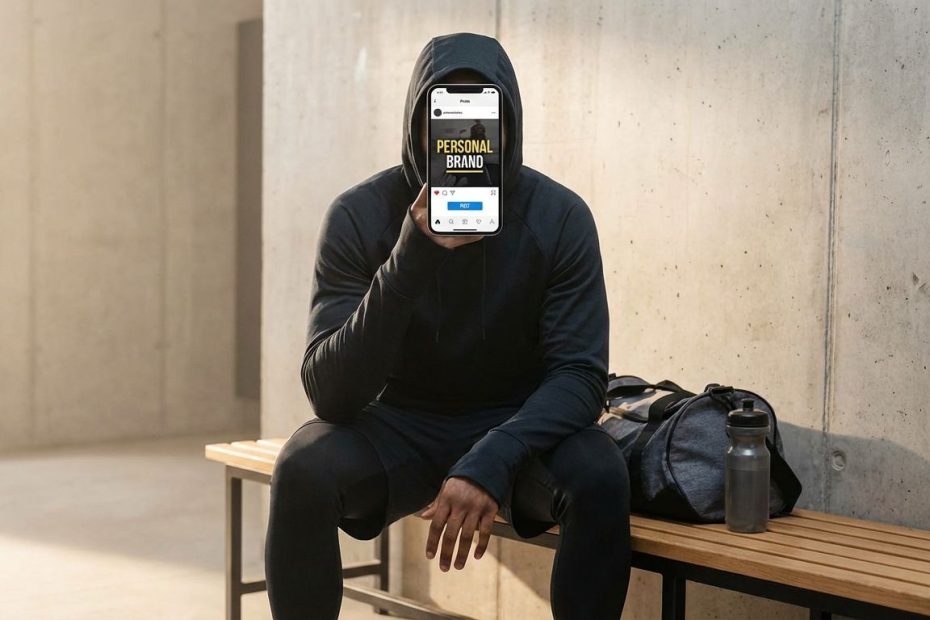
Your personal brand off the court now shapes how fans remember you, how sponsors evaluate you, and how opportunities find you long before anyone makes an introduction. If you want your athletic career to create value beyond the scoreboard, social media is one of the strongest assets you can build.
You do not need celebrity status to build a meaningful brand. You need clarity, consistency, and a public identity that feels real, useful, and easy for people to understand. This article walks you through what to post, how to grow with purpose, how to turn attention into Name, Image, and Likeness opportunities, and how to protect your energy while doing it.
Why Do Athletes Need A Personal Brand Off The Court?
Your playing ability gets you noticed, but your personal brand explains who you are when the game ends, the season pauses, or your audience meets you for the first time online. Coaches, brands, media contacts, event organizers, and future employers do not only evaluate performance anymore. They also evaluate communication, consistency, public image, and whether people connect with you beyond highlights and stats. If your online presence is weak, unclear, or inactive, you leave too much of your story for other people to define.
Athletes now operate in a media environment where attention moves fast and identity travels with you. Fans do not wait for traditional coverage to learn about you. They find you through short-form video, interviews, training clips, pregame routines, recovery content, team moments, and off-court interests. That shift matters because it gives you direct access to your audience without needing a broadcaster, reporter, or sponsor to act as the middle layer. When you post with intention, you control how people meet you, what they remember, and why they keep following.
There is also a business reason to take this seriously. Name, Image, and Likeness activity recognizes value in appearances, promotional work, branded content, endorsements, and social posts. That means your audience is no longer just an audience. It can become part of your earning power. A strong off-court brand can create income during the season, during the offseason, after graduation, during injury recovery, and after retirement from competition. Few assets in sports carry that kind of range.
Your brand also creates career insulation. Athletic performance can fluctuate. Roles change, rosters change, injuries happen, and media cycles move on quickly. A well-built personal brand gives you staying power when results alone are not enough to hold attention. If people know what you stand for, how you communicate, and what kind of value you bring to the public, you remain relevant in moments when your sport is not the only thing people are discussing.
For college athletes, this matters even more. Many fans now discover athletes before they become household names, and many brands want access to emerging talent with a growing audience instead of waiting until the price rises later. If you build early, you create momentum before the market gets crowded. You also create a record of discipline and professionalism that can help with partnerships, speaking opportunities, media appearances, and future career moves outside sports.
What Should Athletes Post On Social Media To Grow Their Brand?
You should post content that makes your identity easy to understand. Fans do not stay for random uploads. They follow athletes who feel recognizable, consistent, and worth returning to. That means your content needs to show more than game-day output. It needs to show your routine, your standards, your interests, your habits, your voice, and the values that shape how you compete and live.
The best athlete accounts usually work from a few repeatable content pillars. One pillar is performance content, which includes training clips, practice footage, drills, film-room moments, travel days, and recovery habits. Another pillar is personality content, where you show parts of your life outside your sport, including hobbies, style, food, reading, family-safe daily routines, music taste, and campus or team moments. A third pillar is community content, where you highlight causes you care about, mentorship, youth camps, school life, or interactions with fans. A fourth pillar is educational content, where you share lessons, routines, mindset habits, or practical advice related to your craft.
This mix works because audiences do not connect with athletes only through achievement. They connect through familiarity. If your feed only shows victories and polished graphics, your audience learns very little about you. If your content shows how you prepare, how you organize your day, how you manage setbacks, and what matters to you off the court, people start to feel invested in your progress. That kind of interest leads to stronger engagement, stronger recall, and stronger value for sponsors looking for a trusted public face.
Behind-the-scenes content is especially powerful because it gives your audience access without requiring major production. Locker-room moments that are team-safe, travel routines, gameday preparation, rehab work, study habits, nutrition routines, and postgame reflections often perform well because they feel immediate and useful. People want to see what access looks like from your point of view. They also want content that feels native to the platform, not content that looks like a forced advertisement for yourself.
Variation matters too. If you only post one format, your content can become predictable in the wrong way. Short-form video helps with discovery, carousel posts help with storytelling, stories help with frequency and intimacy, and longer captions can sharpen your voice when you have something worth saying. You do not need to master every platform at once, but you do need to understand what each format does for your brand. Discovery, retention, trust, and conversion often come from different types of content.
What you post should also reflect what you want to be known for. If you want to attract training-related brands, your feed should show discipline, structure, and craft. If you want speaking opportunities, your communication style should show clarity and confidence. If you want local business partnerships, your content should make your community ties visible. Random growth is possible, but strategic growth is easier to monetize and easier to sustain.
How Can Athletes Turn Social Media Into Name, Image, And Likeness And Sponsorship Opportunities?
You turn social media into business opportunities by making your value easy for a brand to understand. Most brands are not searching only for the biggest follower count. They are looking for fit, trust, audience quality, consistency, and signs that you can represent them without creating confusion or extra work. If your page makes it obvious who you are, who follows you, what kind of content you create, and how people respond to it, you become easier to buy.
Start by treating your profile like a public business card. Your photo should be clear. Your bio should communicate your sport, school or team status if relevant, your role, and a simple identity statement that matches your content. Your contact path should be easy to find, whether that is an email address, a management contact, or a direct message option you actually monitor. Brands move quickly when they see a fit, and confusion creates friction. If someone has to guess whether you are active, available, or serious, that deal can move elsewhere.
Your content archive also acts as proof of execution. Sponsors want to know whether you can deliver a message in a way that feels natural to your audience. That means your feed should already contain examples of your voice, your visual style, your consistency, and your ability to hold attention. Many athletes wait for a deal before improving their content. The stronger move is to post as if the deal is already watching. That builds trust before the first outreach happens.
Engagement quality matters more than many athletes realize. A smaller account with an engaged community can outperform a larger account with weak responses and low trust. If your audience comments with real reactions, shares your content, watches your videos, and returns regularly, you have something valuable. Brands notice whether your following looks active and aligned with your identity. A niche audience that cares can be worth more than a broad audience that scrolls past without reacting.
Consistency also signals reliability. Sponsors want to know that you can post on time, follow a brief, communicate professionally, and protect your own image while representing theirs. If your feed is active for two weeks and then disappears for a month, you send a message of unpredictability. If you post with a stable rhythm and maintain a clean, recognizable identity, you send a message that you can handle responsibility. In the Name, Image, and Likeness market, professionalism often separates athletes who get one-off deals from athletes who build repeat relationships.
You should also understand that sponsors buy narratives, not just impressions. A nutrition company may want your recovery routine. A local restaurant may want your campus connection. A training brand may want your discipline and habits. A wellness brand may want your daily structure and community trust. If you define your story clearly, you help the right sponsors imagine the partnership before they contact you. That shortens the path from visibility to revenue.
College sports have shown how much social value can sit inside rising programs and athlete-driven storytelling. Women athletes and younger audiences, in particular, have shown that engagement, relatability, and cultural relevance can outperform old assumptions about who drives attention. If you build a brand that feels specific and real, you do not need to wait for mainstream fame to create commercial value.
Does Follower Count Matter More Than Authenticity For Athlete Branding?
Follower count matters, but authenticity usually decides whether your brand actually works. A big audience can get you seen, yet trust is what gets people to stay, respond, remember you, and take action when a brand appears on your page. If your content feels generic, copied, or overly polished without substance, your numbers may look respectable while your influence stays shallow.
Athletes often start with a trust advantage over traditional influencers because their identity is tied to performance, discipline, and a visible craft. People already understand what you do and why it requires commitment. That gives you a stronger foundation than someone who built an audience only by posting online. Still, that advantage fades fast if your content becomes robotic. Audiences want a real person with a real pattern of thought, not a stream of interchangeable captions and trend-chasing clips that could belong to anyone.
Authenticity does not mean posting everything. It means posting in a way that feels consistent with your real identity and your actual life. If you care about preparation, show preparation. If your tone is calm and focused, let your captions sound that way. If your personality is funny, disciplined, low-key, detailed, or expressive, your feed should carry that tone naturally. Audiences can detect when an athlete is forcing a style that does not fit. That gap creates distance, and distance weakens brand value.
Authenticity also improves sponsor performance. When a product fits your routine and your endorsement sounds believable, your audience is more likely to accept it. When the partnership feels disconnected from your image, even a large following may not convert. Sponsors have grown more aware of this gap. They want creators and athletes who can integrate branded content into a recognizable personal identity. That is why resonance often beats reach. Being remembered by the right audience can matter more than being seen by the wrong one.
You should also think about authenticity as a filter. It helps attract the right audience, the right partnerships, and the right opportunities. If your page accurately reflects who you are, people who connect with that identity will stay. People who do not fit will move on. That is useful. A brand is not meant to appeal to everyone. It is meant to create clarity. Clarity makes growth stronger, negotiations easier, and your content more sustainable over time.
When athletes focus too much on follower count, they often start copying what appears to work for someone else. That can distort the brand quickly. Trends can help with discovery, but they should support your identity, not replace it. Growth that comes from a clear voice and a consistent image is easier to maintain and easier to monetize than growth built on imitation.
How Often Should Athletes Post Without Burning Out?
You should post often enough to stay visible and build momentum, but not so often that content creation starts damaging your energy, your mood, or your performance. The goal is sustainable consistency. That usually beats short bursts of heavy posting followed by silence. Your audience learns to trust your presence when your activity feels steady, and you protect your output when your system is realistic.
Many athletes burn out because they build their content process around daily pressure instead of repeatable structure. They open the app and ask what to post every single day. That creates unnecessary friction. A better move is to decide in advance what categories you cover, when you capture content, and how you rotate formats. Once your process is set, posting feels less like improvisation and more like routine execution.
A practical rhythm can look different depending on your goals and season. If you are in growth mode, short-form video several times a week can improve discovery and help you learn what your audience responds to. If you are maintaining an already active profile during a heavy competition period, fewer high-quality posts and more lightweight story updates may be the smarter move. During offseason periods, you may have room to publish more training content, lifestyle content, and deeper reflections without competing against the stress of travel and games.
Batching content solves a large part of the burnout problem. Capture multiple clips during one training day. Record short thoughts after practice when the details are fresh. Save drafts, build a bank of evergreen posts, and reuse themes that already fit your brand. Your audience does not need constant reinvention. They need consistency and recognizable value. Repetition is not a weakness when the content stays useful and aligned with your identity.
You should also separate posting frequency from performance pressure. Not every upload needs to be a breakout hit. Athletes often overthink social media because they tie every post to public validation. That mindset makes the work heavier than it needs to be. Treat your content like a long-term asset, not a daily verdict on your worth. Strong brands are built through repeated signals over time, not one perfect post.
Boundaries matter here as well. Decide when you are off the app. Decide whether game days are active posting days or low-input days. Decide how often you review comments. If you let social media fill every spare moment, the mental drain adds up fast. If you control your process, you keep your brand active without allowing it to take over your life.
What Risks Do Athletes Face On Social Media, And How Can You Protect Yourself?
Social media gives you reach, access, and opportunity, but it also exposes you to harassment, impersonation, privacy loss, misinterpretation, and mental fatigue. Athletes often face more direct abuse than the average user because sports trigger strong reactions, public disappointment, betting-related anger, rivalry behavior, and crowd-driven pile-ons. If you are building a public brand, safety cannot sit on the side. It needs to be built into how you operate.
One of the biggest mistakes athletes make is treating social media like a casual environment when their audience already sees them as a public figure. That mismatch creates risk. Your account may feel personal to you, yet many people view it as public property open for commentary. Once your visibility rises, every post can travel outside your intended audience. That includes clips, screenshots, quotes, and reactions taken out of their original setting. You need posting habits that account for that reality.
Start with platform controls. Filter keywords in comments and direct messages. Tighten privacy on personal accounts if you maintain a separate private space. Limit who can tag you, mention you, or reply in certain formats. Review your location habits and avoid sharing real-time movements that compromise safety. If you work with a team, school staff member, or representative, build a process for flagging abuse and documenting serious messages. You do not need to absorb everything personally to prove toughness.
Mental protection matters just as much as technical protection. Constant exposure to praise and criticism can distort judgment, mood, and self-image. You should decide when you read replies, when someone else screens messages, and when to step back after high-pressure events. A temporary break from comments after a loss, a mistake, or a viral moment can protect your focus without harming your brand. Presence does not require nonstop accessibility.
Brand protection also matters. A careless post, a rushed caption, or a public argument can damage sponsor trust and distract from everything you have built. That does not mean your account should feel lifeless. It means you should post with discipline. If a topic is emotionally charged, pause before publishing. If a sponsor relationship is active, review whether your public tone still matches the professional image you are selling. A strong brand does not come from sounding perfect. It comes from sounding consistent, measured, and aware of the stakes.
Support systems matter more than many athletes admit. If your profile is growing, do not manage everything alone if the pressure is rising. Ask for help with moderation, deal review, scheduling, or brand communication when needed. Social media is part of your public career now. Treating it with that level of seriousness protects your reputation and your peace of mind.
How Are Women Athletes And College Athletes Winning Bigger On Social Media Right Now?
Women athletes and college athletes are proving that audience growth is no longer reserved for the most traditional power structures in sports. They are winning online by combining performance with personality, community connection, cultural relevance, and short-form storytelling that fits how people now consume sports content. If you study what is working in athlete branding right now, this group offers some of the clearest signals.
One reason is relatability. Fans often feel closer to athletes whose content shows daily routines, campus life, travel, team chemistry, preparation habits, and off-court identity. College athletes live in a setting that naturally produces content people want to follow. Their audience includes classmates, alumni, family networks, local communities, recruits, casual fans, and younger viewers who want to see a version of the athlete journey that feels current and accessible. That built-in community gives their content a strong base.
Women athletes have also shown how powerful direct storytelling can be when paired with performance. Accounts that blend competition clips with personality, humor, routine, and clear voice often generate strong engagement because they create a fuller connection. Fans are not only following a result. They are following a person with habits, opinions, standards, and visible momentum. That gives brands more room to partner with the athlete in a way that feels natural and commercially useful.
Short-form video has helped accelerate this trend. It rewards clarity, character, and repeatable storytelling. Athletes who understand how to package training, travel, game-day preparation, and everyday life into clean, easy-to-follow content are building attention faster than athletes who rely only on institutional coverage. If you are waiting for your team account or traditional media to build your audience, you are moving slower than the market. The athletes who win online now act like publishers of their own identity.
Name, Image, and Likeness activity has expanded the business side of this growth. Brands are more willing to work with athletes who have active communities, a clear image, and strong engagement in specific niches. That has opened more doors for athletes who may not fit old media assumptions but do fit modern audience behavior. A volleyball player, gymnast, softball player, runner, or rising basketball guard can now attract meaningful attention through smart storytelling and platform-native content.
If you want a practical lesson from this shift, it is simple: build for connection, not just visibility. Audiences are responding to athletes who feel accessible, disciplined, and easy to understand. Sponsors are following that attention. If your content helps people know who you are off the court, you put yourself in a stronger position to benefit from the same forces driving this current wave of athlete-led growth.
How Do Athletes Build A Personal Brand On Social Media?
- Define what you want to be known for.
- Post training, personality, and behind-the-scenes content consistently.
- Keep your profile clear and brand-ready.
- Build trust with authentic content, not inflated numbers.
- Protect your privacy, energy, and public image.
Build A Brand That Outlasts The Season
Your off-court brand is no longer optional if you want to expand your influence, protect your earning potential, and create opportunities that travel with you. The athletes who stand out now are not only performing well, they are communicating well, showing up consistently, and making their identity easy to understand. If you post with purpose, build around clear content pillars, stay disciplined with your cadence, and protect your boundaries, your social presence can become a long-term asset instead of a distraction. Keep your brand specific, useful, and real, and you give fans, sponsors, and future partners a reason to keep paying attention long after the final whistle.
References
- NIL (Name, Image, Likeness) – NCAA.org
- How A UCLA Volleyball Player Grew Her Social Media | NCAA NIL Assist
- NCAA, Meta Announce Collaboration On NIL Empower Program – NCAA.org
- 2024 Has Been the Year of the Athlete
- The Role Sports Play in Gen Z’s Lives
- NCAA Pilot Study Finds Widespread Social Media Harassment Of Athletes, Coaches And Officials | AP News
- NIL At Four: Monetizing The New Reality
- SportOnSocial International Federations 2025 Report
- crossfit-esque instagram media companies, “managers”, are killing the over arching “branding” of the sport : r/crossfit
- Looking for ideas for how small businesses are structuring NIL deals with college athletes : r/Entrepreneur
- Burnout from personal branding : r/InstagramMarketing

Barry Bekkedam is an entrepreneur and finance executive focused on investment management and advisory. A former Villanova standout and member of Canada’s men’s national basketball team, he now leads ventures in asset management and philanthropy, including the Barry Bekkedam Foundation supporting education and community development.