
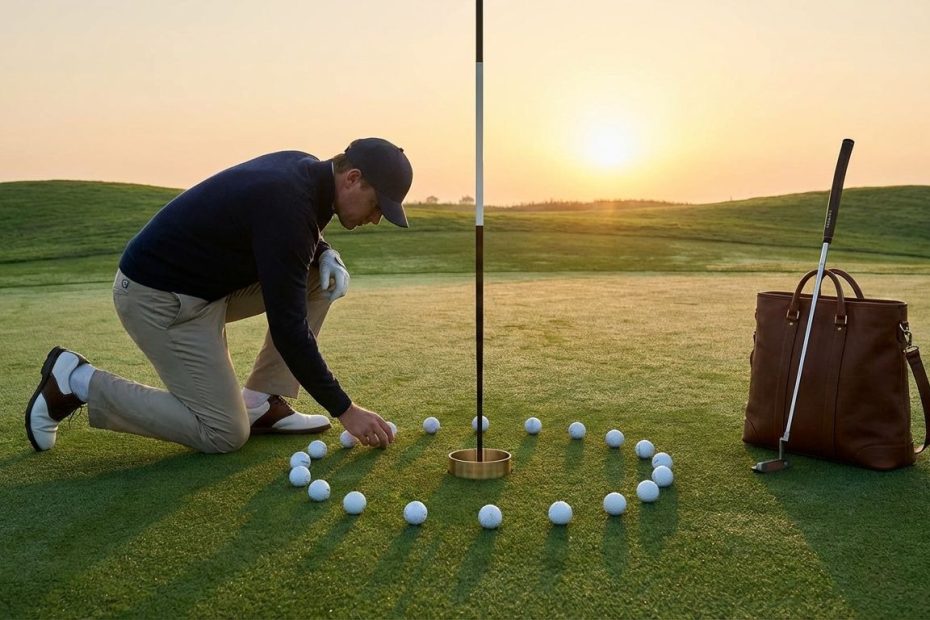
The “one” pressure putting drill that keeps showing up in high-level practice is the Clock Drill (also called Around-the-World or a Circle Drill): short putts from multiple spots around the hole where a miss forces a reset, so every stroke carries real consequence.
You want pressure-proof putting, not practice-green confidence. This article gives you a field-tested way to build that “must-make” feeling on command, using the same kind of stakes that show up over a four-footer to save par.
You’ll get a step-by-step setup, the distances that matter most under pressure, performance targets that stay realistic, and simple upgrades that make the drill translate to the course instead of staying trapped on the practice green.
What Is The One Putting Drill Golf Pros Swear By For Pressure Situations?
The drill is the Clock Drill: putts from short range around the hole, taken one at a time, where you must clear the set clean or restart after a miss. It is simple, portable, and it forces the one thing most golfers avoid in practice, a consequence that creates nerves.
That consequence matters because pressure is rarely about “knowing the right stroke.” Pressure shows up when the score is attached to the outcome, and your body tightens, your eyes rush, and your face angle gets sloppy. The Clock Drill recreates that moment without needing a tournament, a betting game, or a crowd.
It also trains what decides most short putts: start line, pace that holds its line, and routine discipline. When you rotate around the hole, you see different breaks, different visuals, and different comfort levels, so you stop relying on one straight putt to feel “locked in.”
Coaching systems also formalize this idea. Dave Pelz’s 3-foot circle exercise is built around placing stations around the cup and working to make a full set in a row, teaching how much short putts can still break while demanding clean execution. That “make them all” requirement is the pressure ingredient.
How Do You Do The Clock Drill Step-By-Step So It Actually Builds “Pressure-Proof” Putting?
Set up 6 to 12 stations around one hole, evenly spaced like numbers on a clock. Use tees, coins, ball markers, or just place balls carefully, and start at 3 feet on a section of green that has at least a little slope so you see real break.
Hit one putt, then walk to the next station and repeat until you clear the circle. If you miss, apply a reset rule that forces accountability, then restart. The reset can be strict (miss one, restart at station one) or scaled (miss two total, restart), as long as it creates a moment where the next putt feels like it matters.
Execute each rep with your on-course routine. Read it, pick a start line, set the face, set the feet, take the same number of looks, then roll it. The drill loses value when it turns into rapid-fire stroke rehearsal, because the course never gives five identical putts in a row, and nerves do not show up when nothing is on the line.
A useful progression is simple and measurable. Clear a full rotation at 3 feet, then earn the right to move to 4 feet. Keep the total volume low enough that every putt stays “alive,” since fatigue and sloppy setup turn pressure practice into random practice.
Why Do Pros And Good Coaches Focus So Much On 3–6 Foot Putts For Pressure Practice?
Short putts decide rounds because they look easy, then cost you when the brain labels them “automatic.” That mental label makes golfers stop reading, stop committing, and stop finishing the stroke, which is why pressure makes the miss feel shocking.
The numbers also explain why 4–6 feet gets so much attention. On the PGA Tour, the make rate is about 91.43% from 4 feet, 80.72% from 5 feet, and 70.21% from 6 feet. That is a steep drop across just two feet, and it is exactly why these putts swing momentum and scoring.
Those distances also expose the mechanics that matter most. Face angle at impact, start line control, and a stable routine decide whether the ball starts where you aimed. Under pressure, golfers tend to add hand action, peek early, or change speed, and short putts punish those errors immediately.
The Clock Drill targets that zone relentlessly. You get repetition without sameness, and you get consequence without chaos, which is the closest thing to tournament putting that practice can deliver.
How Many Putts In A Row Should You Try To Make, And What’s A Realistic Goal?
A practical goal is a full clear of your stations, not a giant number that turns practice into a grind. If you use 12 stations, aim to make all 12 at 3 feet at least once in a session. If you use 6 stations, clear it twice. Keep the rules strict enough that the last two putts feel heavier than the first two.
Dave Pelz’s circle drill language points to a clean benchmark: “try to make all 12 putts in a row,” then raise the requirement as skill improves. That is a strong structure because it forces you to hold form through the final stations when tension builds.
Move back only after you can repeat success. A good sequence is: clear at 3 feet, then clear at 3 feet again, then go to 4 feet. If 4 feet becomes a miss-fest, the drill stops being pressure training and turns into frustration training, so tighten the process before extending the distance.
Use results to set targets that match your level. A mid-handicapper who clears 12/12 from 3 feet once per session is building a real scoring skill. A stronger player who clears 12/12 twice at 3 feet and once at 4 feet is building a competitive short-putt base.
What’s The Most Common Mistake People Make With This Drill That Stops It From Translating To The Course?
The most common mistake is turning the drill into blocked repetition: same routine speed, same mindset, same tempo, with no variability and no real decision-making. That style can make you feel good for ten minutes, then disappear when you face an unfamiliar line on the course.
High-quality instruction has been blunt on this: repetitive practice from the same spot does not prepare you for real greens. Variable practice forces your brain to adjust to new slopes, new reads, and new speeds, building adaptability instead of “one-putt confidence.”
The fix is operational, not philosophical. Keep the stations, keep the reset rule, and commit to a full routine every time. Take the extra five seconds to read the putt again, and hold your finish until the ball stops, since pressure putts are lost when the body rushes to see the outcome.
Another quiet mistake is practicing only makes. Pressure putting is also about accepting that misses happen, then returning to process on the next one. The reset rule teaches that skill if you treat the restart as part of training instead of a punishment.
How Do You Add Even More Pressure Without Changing Your Stroke Mechanics?
Add pressure by upgrading stakes, not by adding swing thoughts. The stroke stays simple, the setup stays consistent, and the environment gets harder in ways that resemble the course: consequence, timing, and uncomfortable visuals.
Three pressure upgrades work well. Use a “must-make finisher” where the final station is the hardest look (downhill or sidehill). Add a two-strike rule where a second miss ends the set, forcing focus when you are already irritated. Add a clock that limits how long you can stand over the ball, since indecision is a major cause of short-putt misses.
Also train pressure through the scoring skill that prevents the worst kind of pressure: the knee-knocking comebacker. Better speed control on longer putts reduces three-putt frequency, which reduces the number of “save bogey” four-footers you face. PGA coaching content has highlighted speed-control practice as a direct path to fewer three-putts and lower scores.
Pressure practice stays clean when you measure outcomes. Track “sets cleared,” “misses per set,” and “time per putt,” then improve one metric at a time. That turns the drill into a system that produces results, not a ritual.
What Is The Best Putting Drill For Pressure?
Best drill: Clock Drill, place 6–12 short putts around a hole, make them all, a miss triggers a reset, so every putt carries consequence.
Build A Short-Putt Routine You Can Trust When It Matters
Pressure putting improves when practice feels like real golf: one ball, one read, one committed stroke, and a consequence that makes the next putt matter. The Clock Drill delivers that with almost no setup, and it targets the distances where rounds flip, 3 to 6 feet. Use strict but fair goals, apply a reset rule that keeps the heart rate up, and keep the routine identical from the first station to the last. Pair it with variable practice habits so you stop relying on one “comfortable” putt to feel ready. Put this into two or three sessions per week, and you will walk onto the course expecting to make the putt instead of hoping the hole cooperates.
References
- Reddit r/golf: “Give me your best putting exercises”
- SYNLawn Golf: Dave Pelz “Elements of Practice: Short Putts”
- SYNLawn Golf Canada: “Elements of Practice: Short Putts”
- GOLF.com: PGA Tour putting make percentages by distance
- GOLF.com: Ed Oldham on variable practice and drills to reduce three-putts
- PGA.com: “No More 3-Putts in 2026” speed-control drill
- Dan Hansen Golf Instruction: Circle putting drills
- John Hughes Golf: “No More 3 Putts!”
- How To Break 80: Pressure putting drills

Barry Bekkedam is an entrepreneur and finance executive focused on investment management and advisory. A former Villanova standout and member of Canada’s men’s national basketball team, he now leads ventures in asset management and philanthropy, including the Barry Bekkedam Foundation supporting education and community development.