
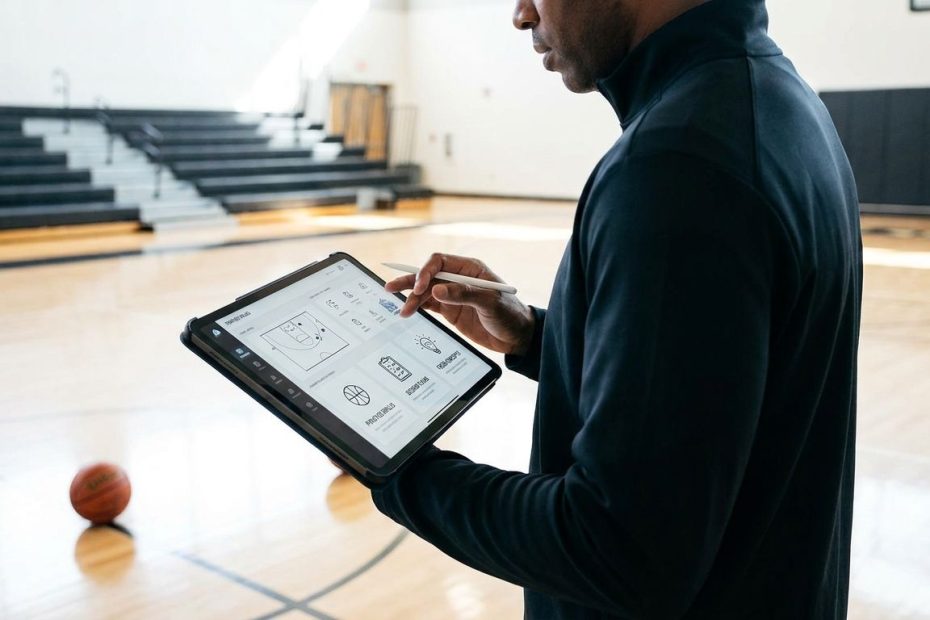
The best practice-planning tools for basketball coaches reduce repetition by combining drill libraries, time blocks, session history, and team scheduling in one place. Choose the tool that matches the way you coach: diagram-first, planner-first, mobile-first, animation-first, or schedule-first.
If your practices are starting to feel copied and pasted, the problem usually isn’t effort. It’s that your planning system doesn’t make variety easy. This guide compares five tools that help you plan better basketball practices, rotate drills with purpose, and stop defaulting to the same session every week.
Why Coaches Accidentally Repeat Their Basketball Practices And Why It Hurts
Most repeated practices happen for practical reasons. You have limited time, a roster that changes, gym constraints, and a short window to make the session useful. When you’re under pressure, you reach for the drills you already know. That keeps practice moving, but it can also make player development too predictable.
Repetition has value when it builds a skill with intent. The problem starts when the whole session repeats without a new teaching point, constraint, pace, scoring rule, or decision-making demand. Players learn the pattern instead of solving the game. Once that happens, energy drops and improvement slows.
A good planning tool gives you memory and variation. It helps you see what you ran last week, what skill area you skipped, and where your team needs more work. Instead of building from a blank page, you build from a record. That’s how you keep practice familiar enough to teach well and fresh enough to keep players engaged.
What To Look For In Practice-Planning Tools For Basketball Coaches
The best practice-planning tools for basketball coaches should save time without turning your plan into a rigid script. Look for a drill library, a simple session builder, notes, printable or shareable plans, and some way to organize by skill area. If a tool can connect drills to plays, attendance, or a team calendar, it becomes more useful across a full season.
Start with your coaching environment. A youth coach may need simple drills, fun constraints, and easy communication with families. A high school coach may need periodized practice blocks, scouting prep, player groups, and repeatable templates. A club coach may care more about mobile access and quick changes when attendance shifts.
Also check how fast the tool is during real use. If it takes too long to enter a drill, adjust time, or pull up a plan in the gym, you won’t use it consistently. The right tool should make planning lighter, not add another admin task. Your practice plan needs to be clear enough to run from, flexible enough to change, and organized enough to review later.
Tool 1: FastModel Sports — The Pro-Level Drill And Play Architect
FastModel Sports is the strongest fit when your practice planning is closely tied to plays, actions, and team concepts. FastModel states that its platform is used by more than 90% of National Basketball Association(NBA) teams, National Collegiate Athletic Association Division I(NCAA D1) programs, and thousands of high schools. Its coaching platform includes practice and game planning, a drag-and-drop session builder, a drill library, and integration with play diagrams.
This matters if your repeated practices come from teaching concepts in isolation. You can connect a drill to the action you’re installing, then build the session around how that action appears in the game. A pick-and-roll teaching day can move from breakdown work, to guided reads, to live advantage play, instead of becoming another generic ball-screen drill block.
FastModel is best for coaches who want structure and visual detail. It suits programs where assistants need to share plans, players need clear diagrams, and practice connects directly to game preparation. If you only need a quick list of drills, it may be more tool than you need. If your practices need better flow from teaching to execution, it gives you a strong planning base.
Tool 2: Coach’s Planner — The Budget-Friendly Season Companion
Coach’s Planner by Sideline Hero is built for coaches who want a dedicated planning system without overcomplicating the process. It allows you to schedule drills, record notes, and generate Portable Document Format(PDF) practice plans. The tool also includes more than 1,000 drills organized by skill category.
This is useful when your main problem is season organization. Instead of planning each session from scratch, you can map themes across weeks: finishing, defensive positioning, spacing, rebounding, pressure handling, and transition decisions. That makes it easier to spot overused drills before players feel the repetition.
Coach’s Planner fits coaches who like a print-friendly or document-based workflow. You can plan digitally, save your notes, and bring a clean plan to the court. It’s also a good match if you prefer a coaching binder style but want better drill access and cleaner scheduling. For coaches who don’t want a full play-diagram platform, this tool keeps the focus on practical session planning.
Tool 3: Hoop Coach — The Mobile App That Fits In Your Pocket
Hoop Coach is a mobile-first option for coaches who plan on the go. Its app includes a drill bank, timer, session builder, and tools for tracking athlete attendance and progression. A free tier is available, which makes it easier for volunteer, recreation, and school coaches to test the workflow before committing to a paid setup.
The biggest benefit is speed. You can build a session from your phone, adjust time blocks, and track who attended without carrying a laptop or paper folder. If your roster changes right before practice, attendance tracking helps you shift the plan instead of forcing the original version.
Hoop Coach is a strong fit for coaches who need a simple basketball practice session builder with practical team tracking. It helps you avoid repetition by keeping drills, timing, and player notes in the same place. When you know which groups missed a concept, you can bring it back with a new drill variation instead of replaying the same practice. That’s a better use of repetition.
Tool 4: Drills By BASKETBALL — Animated Drills You Can Rotate Fast
Drills by BASKETBALL, by BoostedApps, is built around visual drill variety. The app includes more than 650 animated drills, searchable by skill and player age, with the option to create custom practice plans. It can also work without internet access once the content is loaded.
This tool is useful when you know the skill you want to train but need a new way to teach it. If your team needs better passing decisions, you can search for drills that match the age group and skill focus instead of reusing the same passing line. Animated basketball drills also help when you need to explain movement quickly to assistants or players.
Drills by BASKETBALL fits coaches who learn visually and want fast drill discovery. It can reduce planning fatigue by giving you more options inside the same teaching category. You still need to choose drills with purpose, but the search and animation features make variety easier to build into the plan. It’s especially helpful when you want to refresh a session without changing the learning goal.
Tool 5: TeamSnap — Turning Availability Into Practice Variety
TeamSnap is not a pure drill-design tool. Its strength is team management: scheduling, availability, and messaging. Coaches can use those features to build smarter practice plans based on who will actually be in the gym.
This helps more than many coaches expect. If your top ball handlers are absent, you can shift from guard-specific reads to team defensive positioning, finishing through contact, rebounding habits, or small-sided games. If you have a full roster, you can run competitive stations, scrimmage segments, and role-based groups. Attendance should influence the plan, not surprise you at tip-off.
TeamSnap works best when communication is the reason your practices become repetitive. You can share session themes, update schedule changes, and avoid wasting the first ten minutes sorting logistics. It pairs well with a drill library app or playbook tool. Used that way, it becomes the scheduling layer that helps your practice plan match the roster in front of you.
Quick Comparison of Features And Best Fit
Use this comparison to match the tool to your actual planning problem. A coach who repeats practices because they lack drill variety needs a different tool than a coach who repeats practices because attendance keeps changing. Don’t buy the most advanced platform by default. Choose the one that removes your biggest planning bottleneck.
|
Tool |
Main Strength |
Best Fit |
How It Reduces Repetition
|
|
FastModel Sports |
Practice planning with play diagrams |
Advanced coaches, schools, clubs, program staff |
Connects drills to actions, concepts, and game plans |
|
Coach’s Planner |
Season planning, drill scheduling, notes, PDFs |
Coaches who want a simple planner-style system |
Helps rotate skill themes and track what you’ve already run |
|
Hoop Coach |
Mobile session builder, drill bank, attendance tracking |
Coaches who plan from a phone or tablet |
Lets you adjust sessions quickly based on players and progress |
|
Drills by BASKETBALL |
Animated drill library and custom plans |
Visual coaches and youth coaches |
Gives you fast drill alternatives by skill and age group |
|
TeamSnap |
Scheduling, availability, messaging |
Teams with changing attendance or busy families |
Lets you plan based on attendance instead of guessing |
If you already have a strong drill library, TeamSnap or Coach’s Planner may solve more than another drill app. If your sessions lack visual clarity, FastModel Sports or Drills by BASKETBALL may be a better fit. If you coach from the sideline with your phone in hand, Hoop Coach gives you the most direct mobile workflow. The right choice depends on where repetition enters your planning process.
How To Use These Tools To Never Repeat A Session Again
The tool won’t fix repetition by itself. You need a simple planning habit: tag every practice by skill focus, teaching point, and format. A finishing drill run as a line drill is different from the same skill taught through small-sided competition. Track the format, not just the drill name.
Use a weekly rotation that changes one major variable at a time. You can keep the skill focus the same but change the constraint, number of players, scoring rule, spacing, or time pressure. That gives players needed repetition without making the session feel stale. It also helps you compare what actually worked.
After practice, write two short notes: what improved and what needs a new teaching method. Keep it plain. If players understood the footwork but struggled with the read, your next session should change the decision-making piece, not repeat the whole drill. Over a season, those notes become your best planning asset.
The One Practice Habit That Keeps Players Engaged All Season
Keep a “same skill, new demand” habit in every plan. That means you don’t abandon fundamentals, but you stop teaching them the exact same way every week. A passing focus can become partner passing, passing under pressure, passing into advantage play, passing after a closeout, or passing inside a timed scoring game.
This habit works because basketball skills don’t live in neat boxes. Shooting connects to footwork, spacing, passing timing, screening, and defensive pressure. A practice-planning tool helps you see those connections and choose drills that train the same skill in fresh ways. Players get consistency without boredom.
Use your tool to build three versions of your core practice blocks: teaching, competition, and review. Teaching blocks slow the skill down, competition blocks add pressure, and review blocks check retention later. When you rotate those formats, practices feel different without losing direction. That’s the sweet spot for player engagement and skill growth.
Best Practice-Planning Tools For Basketball Coaches
- FastModel Sports: diagrams + session builder
- Coach’s Planner: drill plans + PDFs
- Hoop Coach: mobile planning + tracking
- Drills by BASKETBALL: animated drills
- TeamSnap: schedule-based variety
Build Practices Players Recognize For The Right Reasons
Your players should recognize your standards, teaching language, and pace, not the exact same practice every week. The right practice-planning tools for basketball coaches help you reuse what works, change what feels stale, and plan from evidence instead of habit. FastModel Sports fits diagram-heavy coaches, Coach’s Planner supports season organization, Hoop Coach keeps planning mobile, Drills by BASKETBALL adds visual variety, and TeamSnap helps your plan match attendance. Pick the tool that solves your main bottleneck, then track each session with enough detail to improve the next one. That’s how you stop repeating practices and start repeating progress.
References
- FastModel Sports Coaching Platform
- Coach’s Planner By Sideline Hero
- Hoop Coach App
- Drills By BASKETBALL By BoostedApps
- TeamSnap Scheduling Features
- National Alliance For Youth Sports

Barry Bekkedam is an entrepreneur and finance executive focused on investment management and advisory. A former Villanova standout and member of Canada’s men’s national basketball team, he now leads ventures in asset management and philanthropy, including the Barry Bekkedam Foundation supporting education and community development.