
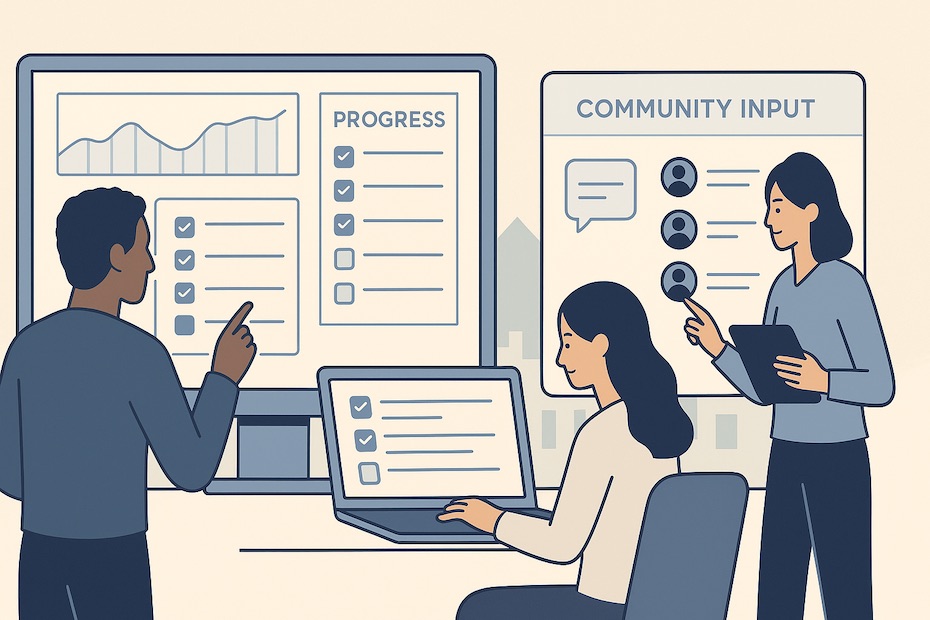
The top platforms for managing community development projects include Asana, Trello, Airtable, OpenProject, CommCare, and Hivebrite—offering collaboration, resource management, and engagement features.
When you oversee community development projects, you need tools that align stakeholders, track progress, and support accountability. This guide explains which platforms are best, how they compare, and what to consider when implementing them.
What platforms are widely used for community development project management?
General project management platforms like Asana, Trello, and Airtable remain the most common starting points. They are user-friendly, cloud-based, and adaptable for different project scales. Asana and Trello simplify task assignments, due dates, and progress visibility, while Airtable adds more data management flexibility.
If you prefer open-source or require a higher level of customization, OpenProject is often adopted by NGOs and municipal groups. It provides timeline planning, Gantt charts, and agile-style tracking, making it suitable for projects that demand both structure and transparency.
For projects that focus more on engagement, platforms like Hivebrite combine task coordination with communication tools for managing communities, events, and feedback in one place.
What features must a platform have for community development projects?
At the core, you need strong task management to ensure work is clearly assigned and tracked. Look for the ability to set milestones, assign owners, and see real-time updates on progress.
Since community projects rely on active stakeholder participation, engagement tools such as surveys, discussion boards, and event scheduling are essential. These help ensure decisions reflect input from residents, partners, and donors.
Finally, reporting and accountability features matter. Whether it’s budget tracking, impact dashboards, or exporting data for funders, a good platform must make transparency easy to maintain.
How do Asana, Trello, and Airtable compare in practice?
Trello is excellent when simplicity is a priority. Its card-and-board format makes it intuitive for community members unfamiliar with digital project management. It works best for smaller or grassroots projects that don’t need complex reporting.
Asana offers more structure and scalability. If your project includes multiple phases and involves larger teams, Asana supports dependencies, subtasks, and project timelines. It provides better visibility and reduces bottlenecks.
Airtable adds database-like functionality. You can track beneficiaries, resources, or community survey responses alongside project milestones. It’s particularly effective if your project involves heavy data management.
Which platforms are specialized for community-focused initiatives?
For health, education, or social development projects that depend on field data collection, CommCare is a trusted platform. It allows mobile-based surveys, offline data gathering, and case management—useful when operating in areas with limited connectivity.
Hivebrite and other community engagement platforms like Tradewing are built to manage memberships, event participation, and communication. These platforms are strong when ongoing involvement and transparency with community members are priorities.
Open-source solutions like OpenProject appeal when cost, privacy, or localization are critical. NGOs often use it to customize workflows and control their own data hosting environment.
What are the trade-offs of these platforms?
General tools like Asana and Trello are flexible but not designed specifically for community development. You may need integrations to handle feedback collection, budgeting, or offline data.
Specialized platforms like CommCare and Hivebrite deliver tailored features but usually involve higher costs or longer onboarding processes. Teams need training to use them effectively, and community members may require extra support to adapt.
Open-source platforms give autonomy but demand technical support. If your team lacks IT capacity, maintenance and security updates can become an obstacle over time.
How should you choose the right platform for your project?
Start by defining the unique needs of your project. Is your priority data collection, stakeholder engagement, or resource tracking? Different platforms solve different problems.
Compare each option against usability, scalability, and integration capabilities. Ask whether community partners can access the platform easily and whether it supports mobile devices in low-bandwidth regions.
Test with a pilot project. Run a small program on the chosen tool before scaling. This lets you identify adoption issues early and refine your communication strategy.
Key steps for selecting the right platform:
- Clarify core requirements (data, engagement, or tracking)
- Match platform strengths to project complexity
- Balance costs with community accessibility
- Test before scaling across all stakeholders
- Provide training and written guidelines for smooth rollout
What does success look like when a platform is used effectively?
You’ll see fewer delays and clearer ownership of tasks. Each stakeholder knows their responsibilities, and the project manager has visibility into dependencies and deadlines.
Community voices are incorporated because engagement features capture their feedback. Surveys, forums, or polls are not left unused—they inform action and decision-making.
Reporting becomes seamless. Whether donors, municipalities, or community boards request updates, you have dashboards and exportable data to share quickly and accurately.
Top platforms for managing community projects
- Asana for structured tasks
- Trello for simplicity
- Airtable for data management
- OpenProject for transparency
- Hivebrite for engagement
- CommCare for field data
In Conclusion
You align community development projects more effectively when you pair the right platform with a clear process. Asana, Trello, Airtable, OpenProject, Hivebrite, and CommCare each serve different needs—task tracking, engagement, or data collection. The key is choosing the tool that balances usability, cost, and functionality to support your mission.

Barry Bekkedam is an entrepreneur and finance executive focused on investment management and advisory. A former Villanova standout and member of Canada’s men’s national basketball team, he now leads ventures in asset management and philanthropy, including the Barry Bekkedam Foundation supporting education and community development.