
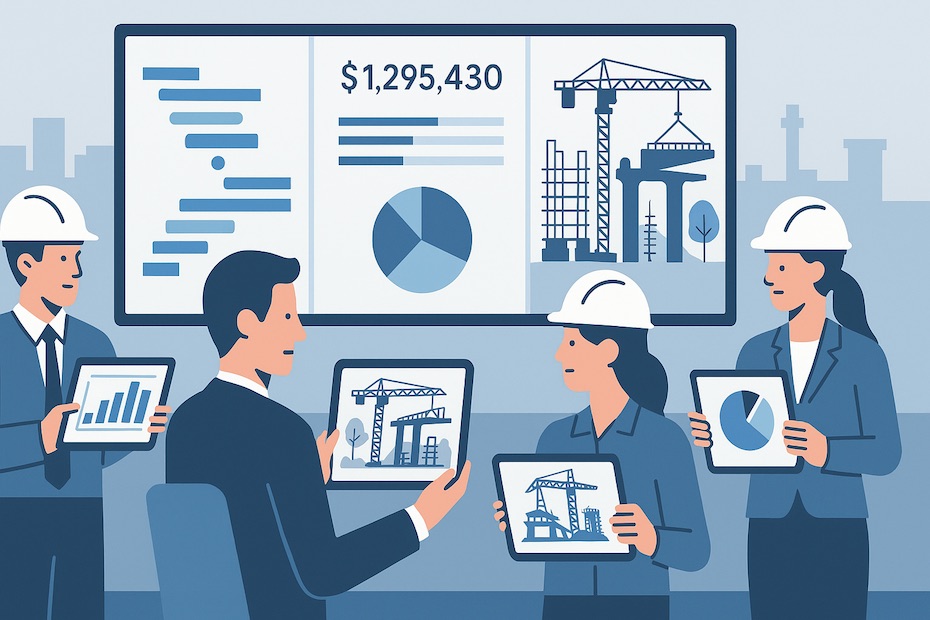
You streamline infrastructure delivery by leveraging purpose-built project management software such as Oracle Aconex, Aurigo Masterworks, Autodesk Construction Cloud, Procore, Smartsheet, and PlanRadar—each designed for large-scale, complex projects that require precision, compliance, and collaboration.
Infrastructure projects are high-stakes operations where delays, budget overruns, and miscommunication can erode outcomes. The right infrastructure project management software gives you control over planning, execution, documentation, and handover—without bottlenecks. This guide outlines the top platforms that leading construction firms, public agencies, and engineering teams use to maintain efficiency and accountability from start to finish.
Which software is best for document management and compliance in infrastructure projects?
When your project involves thousands of drawings, RFIs, and approvals, document control becomes mission-critical. You can’t afford version confusion or misplaced approvals when a bridge, rail line, or utility network depends on precision.
Oracle Aconex is one of the most widely adopted solutions for infrastructure documentation. It provides a secure, centralized platform where every file, comment, and approval is tracked with a full audit trail. It’s designed to handle the sheer volume and complexity of large-scale builds, ensuring that every stakeholder works from the latest information.
Its workflow automation reduces turnaround time for RFIs and submittals, while role-based permissions maintain security and compliance. This level of control is why major infrastructure projects—from highways to energy plants—rely on it.
Which platform excels at managing capital programs for public infrastructure?
When you oversee multiple projects under one capital program—like a citywide transportation overhaul—you need more than a standard project management tool. You need something that can track the lifecycle of every project while rolling up data for program-wide reporting.
Aurigo Masterworks is built specifically for public sector infrastructure. It manages budgeting, contract administration, scheduling, and regulatory compliance in one platform. Beyond individual projects, it gives you portfolio-wide dashboards so you can allocate resources strategically.
Transportation departments, water utilities, and municipal governments use Aurigo to coordinate multi-year, multi-billion-dollar programs without losing sight of individual project performance. Its cloud-based architecture ensures that everyone—from agency leaders to field inspectors—works in sync.
How can you integrate design, scheduling, and field operations seamlessly?
The biggest productivity gains in infrastructure come when design teams, project managers, and field crews operate on the same data set. If design revisions don’t reach the field instantly, you risk costly rework.
Autodesk Construction Cloud bridges this gap by integrating Building Information Modeling (BIM) with project workflows. From 3D models to issue tracking, it connects design updates directly to schedules, checklists, and work orders.
This integration allows field teams to visualize design intent, catch conflicts early, and execute tasks based on the most recent plans. For infrastructure projects like rail networks or airport expansions, the ability to overlay as-built conditions on BIM models keeps errors to a minimum.
Which solution offers the most intuitive collaboration for mixed-skill teams?
Not every project participant is a software expert. You need a platform that’s powerful enough for managers but accessible for subcontractors, field engineers, and administrative staff.
Smartsheet achieves this balance with a spreadsheet-inspired interface combined with automated workflows, Gantt charts, and reporting tools. It’s versatile enough to handle scheduling, task assignments, and real-time updates without requiring extensive training.
Infrastructure teams use it for cross-department coordination, tracking dependencies, and sending automated alerts when milestones approach or deadlines slip. Because it’s cloud-based, everyone from the project office to the construction site stays connected.
What platform delivers AI-powered insights for infrastructure projects?
Infrastructure projects generate vast amounts of data—yet without analysis, that data remains underused. If you want to improve decisions, you need AI to surface patterns and forecast outcomes.
Procore integrates AI into its project management suite through Procore Copilot, which analyzes project data to highlight risks, suggest actions, and provide summaries of complex documentation.
In addition to AI capabilities, Procore covers preconstruction, budgeting, scheduling, safety management, and field reporting. Its modular design allows you to implement the components you need without overloading your teams.
Which mobile-first platform is best for on-site issue tracking?
In infrastructure, problems discovered in the field need to be documented and escalated immediately—waiting for a weekly meeting is too late.
PlanRadar is designed for mobile-first project management. Field teams can log issues with photos, notes, and geotags directly from their phones or tablets. The data syncs in real time (or offline for remote sites), ensuring nothing gets lost.
Quality assurance checklists, maintenance logs, and defect reports can be generated instantly, keeping work moving without administrative delays. For roadworks, power plants, or pipelines, this rapid capture of field data is invaluable.
Why do integration and scalability matter in your software choice?
Infrastructure projects are rarely isolated—they intersect with accounting systems, asset management platforms, and regulatory databases. If your project management software doesn’t integrate with these systems, you create data silos.
All six platforms—Oracle Aconex, Aurigo Masterworks, Autodesk Construction Cloud, Smartsheet, Procore, and PlanRadar—offer APIs and integrations to connect with ERP systems, BIM tools, GIS software, and compliance databases.
Scalability ensures these tools can handle small upgrades as well as multi-year megaprojects, meaning you can standardize your processes across an entire organization without switching platforms midstream.
Key capabilities you should prioritize when selecting infrastructure PM software
- Centralized, version-controlled documentation
- Capital program and portfolio management
- BIM integration for design-to-field workflows
- Flexible collaboration for varied technical skills
- AI-enabled risk detection and reporting
- Mobile-first issue tracking and QA
- Open APIs for integration with enterprise systems
Best Software for Infrastructure Project Management
- Oracle Aconex – Document and compliance control
- Aurigo Masterworks – Public infrastructure capital programs
- Autodesk Construction Cloud – BIM-integrated workflows
- Smartsheet – Accessible team collaboration
- Procore – AI-powered coordination
- PlanRadar – Mobile-first field reporting
In Conclusion
When you manage infrastructure projects, software isn’t just a convenience—it’s a performance multiplier. Oracle Aconex keeps documentation precise. Aurigo governs entire capital programs. Autodesk synchronizes design with field execution. Smartsheet simplifies collaboration for mixed teams. Procore uses AI to keep projects on track. PlanRadar empowers rapid, accurate field reporting. Selecting and implementing the right combination of these platforms ensures your projects meet deadlines, respect budgets, and deliver durable results.

Barry Bekkedam is an entrepreneur and finance executive focused on investment management and advisory. A former Villanova standout and member of Canada’s men’s national basketball team, he now leads ventures in asset management and philanthropy, including the Barry Bekkedam Foundation supporting education and community development.