
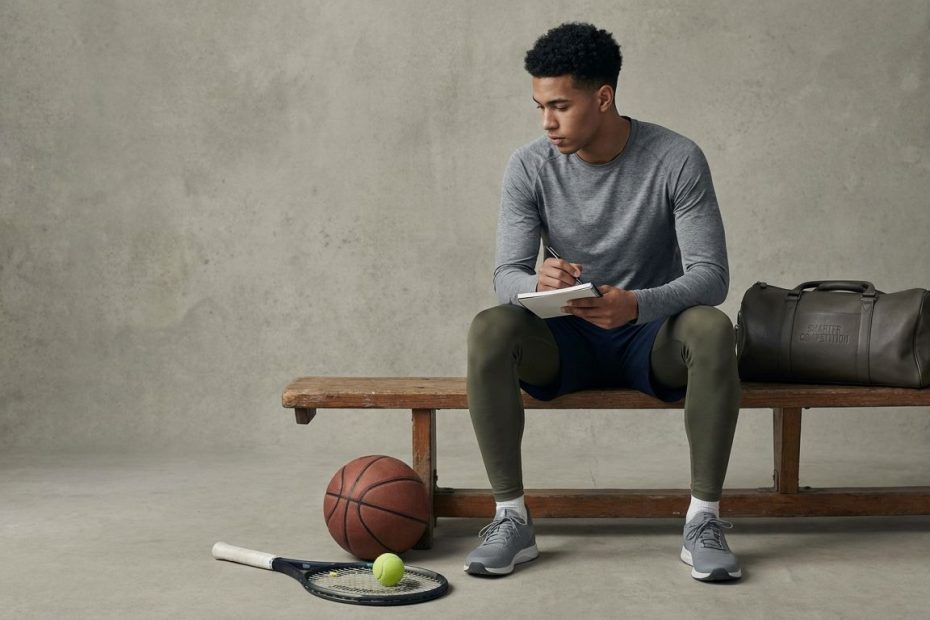
Playing two very different sports can build one smarter competitor because it trains you to solve problems across different rules, speeds, spaces, and body demands. You learn to switch attention, read patterns, adjust movement, and make decisions without relying on one familiar sport script.
That matters whether you’re an athlete, parent, coach, or trainer deciding between early specialization and sport diversification. The real value isn’t just “more exercise.” It’s smarter adaptation: a wider movement library, sharper tactical thinking, and a lower chance of getting stuck in one narrow way of competing.
Does Playing Two Very Different Sports Really Make You Smarter In Your Main Sport?
Yes, playing two very different sports can make you smarter in your main sport when the second sport forces you to process space, timing, pressure, and movement in new ways. You’re building athletic intelligence, not just adding extra practices.
A soccer player who also plays tennis learns to scan a crowded field in one setting and read a single opponent’s body position in another. A basketball player who also practices golf learns to move under pressure at full speed, then slow down and control precision under quiet pressure. Those differences matter because your brain learns to shift gears instead of repeating the same decisions in the same environment.
This is where sport sampling becomes useful. You’re exposed to more cues, more rhythms, and more ways to solve physical problems. The carryover isn’t always direct, but it often shows up in faster recognition, calmer adjustment, and better choices when a game gets messy.
How Do Different Sports Improve Decision-Making?
Different sports improve decision-making by forcing you to read different signals before you act. One sport may reward instant reaction, another may reward patience, sequencing, and controlled execution.
Open-skill sports, like basketball, soccer, or hockey, demand constant reading of teammates, opponents, spacing, and speed. Closed-skill or precision sports, like golf, archery, or some track and field events, demand routine, focus, tempo, and self-control. When you train in one of each, you build a wider decision range: fast when needed, deliberate when needed, adaptable when the plan breaks.
That range helps you avoid predictable habits. If every competitive problem looks like the same sport problem, your answers can get narrow. Two very different sports give you more tools, especially under pressure, when smart competitors don’t just work harder; they notice better options sooner.
What Does Science Say About Sport Diversification And The Brain?
Research on sport diversification links varied sport experience with benefits in cognitive flexibility, skill transfer, and long-term athlete development. The brain gets repeated practice switching between rules, tactics, movements, and feedback patterns.
Cognitive flexibility in sports means you can adjust when the situation changes. You stop depending on a single pattern and start comparing options in real time. A player who has learned different timing systems, field shapes, scoring rules, and movement demands has more mental “routes” available during competition.
Skill transfer also matters. Research on transfer of skill in sport supports the idea that athletes can carry perceptual and movement abilities from one sport into another when the demands overlap. The overlap may be footwork, balance, anticipation, rhythm, hand-eye coordination, body control, or the ability to read an opponent’s intent before the action is obvious.
Can Two Opposite Sports Build A Better Body?
Yes, two opposite sports can build a better body by spreading physical demands across different muscles, joints, movement speeds, and coordination patterns. That variety supports movement literacy and can reduce the strain that comes from repeating one sport all year.
The American Academy of Pediatrics(AAP) has reported that early single-sport specialization is associated with greater risk of overuse injuries and psychological burnout. The National Strength and Conditioning Association(NSCA) has also supported long-term athlete development built around varied movement exposure. The main idea is practical: your body benefits when it runs, rotates, balances, jumps, lands, accelerates, decelerates, and controls force in more than one way.
A runner who adds martial arts gains balance, hip control, reaction timing, and body awareness. A tennis player who swims gains shoulder endurance and conditioning without repeating the same court impacts. A football player who plays baseball may sharpen rotational power and tracking skills through a different competitive demand.
Is Early Specialization Better Than Playing Multiple Sports?
Early specialization can help in certain settings, but for many young athletes, playing multiple sports supports broader development, better enjoyment, and lower burnout risk. Sport diversification gives you more time to grow before narrowing your focus.
Côté’s Developmental Model of Sport Participation supports sampling several sports during childhood before moving toward more focused practice later. That path helps athletes build adaptable skills through deliberate play, varied competition, and different coaching inputs. It also gives you a better chance to discover which sport fits your body, motivation, and long-term goals.
The fear of falling behind is real, especially when club calendars push year-round commitment. Yet the data shared by major sport organizations shows that many elite athletes did not specialize in one sport from the start. The smarter question isn’t “one sport or many forever?” It’s “what mix builds skill, health, confidence, and competitive growth right now?”
What Do Coaches And Recruiters Think About Multi-Sport Athletes?
Many coaches and recruiters value multi-sport athletes because they often bring adaptability, competitiveness, coordination, and coachability from different environments. They’ve had to learn new systems, accept different roles, and compete under varied pressure.
The National Federation of State High School Associations(NFHS) has reported that more than 80% of Division I scholarship athletes played at least two sports in high school, and more than 60% participated in three or more. USA Football has reported that 94% of National Football League(NFL) draft picks in one draft class were multi-sport athletes in high school. Those numbers don’t prove that playing multiple sports guarantees recruitment, but they challenge the idea that early specialization is the only serious route.
College coaches often look for traits that transfer: competitiveness, body control, spatial awareness, toughness, communication, and the ability to learn quickly. A multi-sport background can signal that you’ve succeeded in more than one setting. That matters because college sport demands adaptation: new speed, new playbooks, new training loads, and new roles.
Can A Very Different Sport Transfer Skills To Your Main Sport?
Yes, a very different sport can transfer skills when it trains perception, movement, timing, balance, or emotional control that your main sport also needs. The transfer may be indirect, but indirect transfer can still change how you compete.
Basketball footwork can help a soccer player create space in tight areas. Martial arts can help a tennis player improve balance, stance control, and reaction discipline. Yoga can help a golfer feel posture, breathing, and body alignment, though it isn’t a competitive sport in the same way.
The transfer is strongest when you choose the second activity with purpose. If your main sport is chaotic and reactive, a precision sport can train patience and control. If your main sport is repetitive and technical, a faster team sport can train scanning, anticipation, and flexible decision-making.
How Can You Choose A Second Sport Without Burning Out?
Choose a second sport by matching it to the skill gap, recovery needs, season timing, and mental demands of your main sport. The goal is productive contrast, not more load for the sake of being busy.
Start with the body. If your main sport is high-impact, choose a second sport with lower joint stress during part of the year. If your main sport is upper-body dominant, choose something that builds lower-body coordination, aerobic capacity, or balance. You’re looking for training value without stacking the same strain on the same tissues.
Then look at the calendar and coaching demands. Two overlapping competition seasons can create fatigue, travel pressure, and conflicting expectations. A smarter plan may use one sport as the primary focus during its season and the other as skill-building, fun, or controlled competition during a lighter period.
How Does Playing Two Different Sports Make You A Smarter Athlete?
- Switches your brain between rule sets
- Builds pattern recognition
- Improves decision speed
- Adds movement options
- Reduces one-sport tunnel vision
Build The Competitor Who Can Adjust
The real payoff of playing two very different sports is adaptability. You become harder to predict because you’ve trained more than one way to move, think, read pressure, and solve problems. Sport diversification won’t replace focused practice in your main sport, but it can make that practice richer by giving you a wider base to draw from. If the second sport is chosen with care, it can sharpen your brain, protect your body, and help you compete with more creativity when the game stops going according to plan.
Reference Links
- National Federation of State High School Associations(NFHS): The Benefits Of Participating In Multiple Sports
- American Academy of Pediatrics(AAP): Sports Specialization In Young Athletes
- National Collegiate Athletic Association(NCAA): Why Play Multiple Sports
- Psychology Today: Why Playing Multiple Sports Is Good For Your Brain
- Frontiers In Psychology: Sport Diversification And Cognitive Benefits
- Journal Of Applied Sport Psychology: Transfer Of Skill In Sport
- USA Football: Multi-Sport Benefits

Barry Bekkedam is an entrepreneur and finance executive focused on investment management and advisory. A former Villanova standout and member of Canada’s men’s national basketball team, he now leads ventures in asset management and philanthropy, including the Barry Bekkedam Foundation supporting education and community development.