
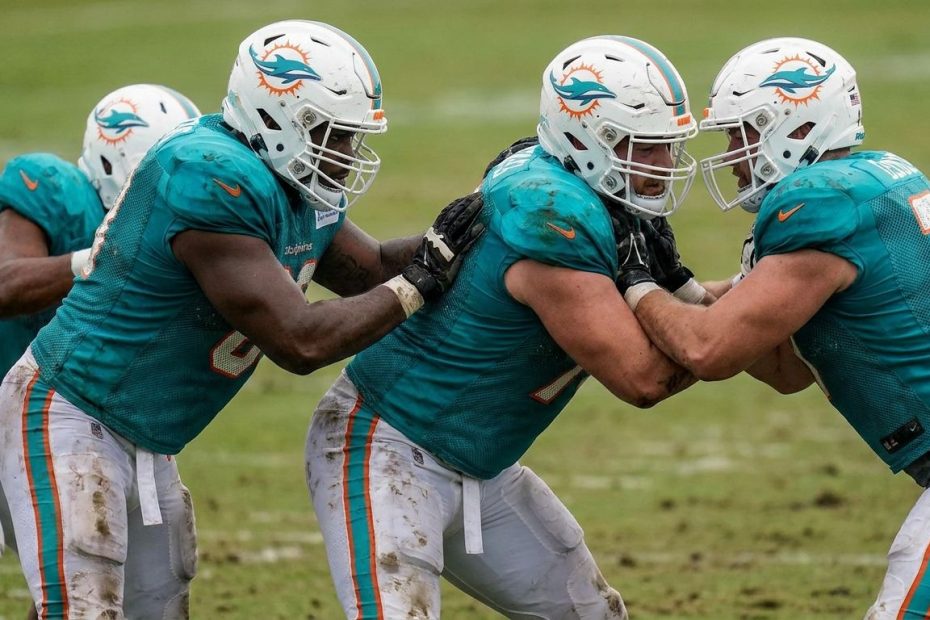
The new Miami Dolphins identity starts in the trenches because the team’s biggest problems were not a lack of flash, speed, or big-play talent. They were protection, run defense, physical finish, and down-to-down control.
You can still enjoy the explosive plays, but you can’t build a reliable National Football League team around highlights alone. This reset is about giving the Dolphins an identity that holds up when opponents take away space, pressure the quarterback, and force Miami to win through contact.
Why Are The Dolphins Trying To Build A New Identity In The Trenches?
The Dolphins are rebuilding their identity up front because the previous version of the team became too dependent on speed creating clean answers. When the timing worked, Miami looked dangerous. When the pocket tightened, the run game stalled, or the opponent controlled possession, the same team looked too easy to knock off schedule.
That’s the part you have to be honest about as a Dolphins fan. A fast offense can scare people in September, but a football team with weak line play gets exposed when defenses condense space and play with heavier personnel. You don’t beat good teams consistently by asking skill players to erase every issue before the ball reaches the second level.
Miami’s record and statistical profile told the front office that this wasn’t a cosmetic repair. The Dolphins finished 7–10, with scoring output and defensive resistance sitting too low for a team built to win shootouts. When your offense doesn’t score enough and your defense gives up too much, the answer usually lives closer to the ball than fans want to admit.
That’s why the trenches matter. Offensive line play gives your quarterback clean launch points, lets your running backs stay on schedule, and keeps third down manageable. Defensive line play does the opposite to opponents: it forces longer downs, creates hurried throws, protects the linebackers, and keeps the game from becoming a weekly test of survival.
You can still keep speed as part of the Dolphins’ personality. You just can’t let speed be the whole personality. The new version needs to be able to run when the opponent expects run, protect when defenses bring simulated pressure, and stop the run before the game turns into a possession drain.
How Bad Were The Dolphins In The Trenches Last Season?
The Dolphins’ trench problems were not limited to one side of the ball. The offense allowed 38 sacks across the season, and the defense gave up 2,251 rushing yards. That combination tells you Miami was not controlling the most physical parts of games often enough.
The sack number by itself doesn’t tell the entire story. Thirty-eight sacks is not an all-time disaster, but it becomes harder to ignore when paired with stalled drives, quarterback disruption, and a passing game that needs rhythm. In a timing-based offense, pressure doesn’t have to produce a sack to ruin the play.
The defensive front had a different problem: opponents could stay committed to the run. Miami allowed 132.41 rushing yards per game and 4.8 yards per carry. That means too many offenses were staying ahead of the chains, forcing Miami’s defense to defend the full call sheet instead of dictating terms.
When a defense allows that kind of rushing volume, the offense feels it too. Your possessions shrink, your play caller presses, and your quarterback gets fewer chances to settle into the game. A speed-based offense becomes less dangerous when it spends long stretches watching from the sideline.
The most useful way to read those numbers is simple: Miami had enough athletes to make plays, but not enough control to stack four quarters. The line of scrimmage decides whether a team can play its preferred style. Too often, the Dolphins had to adjust to somebody else’s terms.
What Did The Dolphins’ Draft Strategy Reveal About The New Direction?
The draft behavior made the message hard to miss. Miami used premium draft capital on big bodies and foundation positions, with defensive tackle Kenneth Grant and offensive guard Jonah Savaiinaea arriving in the 2025 class, then offensive tackle Kadyn Proctor becoming a first-round investment in 2026.
That is not random roster filling. When a team spends early picks on interior defensive line, offensive guard, and offensive tackle across back-to-back drafts, it is telling you where the internal evaluation pointed. Miami decided the fastest way to change the team was to stop treating the line of scrimmage as a patch job.
Kenneth Grant fits the defensive-front need because Miami had to get sturdier against direct runs, combo blocks, and interior movement. A defense that leaks between the tackles forces safeties downhill and makes coverage harder. Interior defensive line strength gives the rest of the defense cleaner fits.
Jonah Savaiinaea fits the offensive answer. Interior offensive line play shapes the quarterback’s comfort more than casual viewers notice, especially against teams that win with inside pressure. Edge pressure can be climbed; interior pressure lands in the quarterback’s lap and kills timing.
Kadyn Proctor is the clearest identity marker. You don’t spend a first-round pick on a tackle with his size and profile unless you intend to become harder to move. That pick tells you Miami wants more than a passable offensive line; it wants a front that can move people, absorb rush plans, and let the offense stay balanced.
Is Miami Moving Away From Speed And Highlight Plays?
Miami is not moving away from speed. The team is moving away from being defined only by speed. That distinction matters because the Dolphins can still use explosive players as finishers, but the offense needs a sturdier base before the highlights become repeatable.
De’Von Achane remains a strong example of why speed still matters. His burst can change a game, and Miami had enough rushing production at times to remind you what the offense can become with cleaner blocking. The issue is whether those runs become part of a weekly identity or remain isolated flashes.
Highlight plays are valuable, but they are usually downstream from boring execution. A crease in the run game, a tackle washing down a defender, a guard reaching the second level, a quarterback getting that extra half-second — those moments don’t trend like a long touchdown. They make the long touchdown possible.
The Dolphins’ skill-position changes also point toward a different formula. When a team no longer stacks the roster around track-speed receivers and wide-open space, the offense has to create more through structure, protection, and run-game answers. That doesn’t make the team less dangerous; it makes the team less fragile if the plan works.
You should want the Dolphins to stay explosive. You should also want them to stop needing the explosive play to rescue drives. The best offenses can win with a 60-yard strike and a six-yard run on third-and-two. Miami’s reset is about earning that second part.
How Does Jeff Hafley Fit A Tougher Dolphins Identity?
Jeff Hafley fits this shift because his arrival gives Miami a head coach connected to defensive structure, accountability, and physical football. The official team messaging around the hire leaned into grit, trust, work habits, and a clear standard. That language matters when it is followed by draft choices that match it.
A defensive-minded head coach does not automatically fix a roster. You still need the right players, the right staff, and enough patience to develop young linemen through rough snaps. Hafley’s value is that his stated priorities align with the exact areas Miami had to repair.
His football background also signals a different emphasis than the previous Dolphins brand. The team had become known for motion, spacing, timing, and speed. Those traits can still exist, but Hafley’s version has to be measured through tackling, run fits, pass-rush discipline, protection rules, and how the team responds when games get tight.
That’s where the head coach and general manager pairing becomes relevant. Jon-Eric Sullivan has also spoken about doing things the hard way and building a team that embraces discomfort. When leadership says it wants toughness and then spends major draft capital on linemen, you can connect the dots without forcing the point.
The honest read is that Hafley is not being asked to produce a miracle. He is being asked to install a standard that shows up in the least glamorous snaps. If Miami becomes harder to run on, harder to pressure, and harder to bully in short-yardage situations, his influence will be visible before the win total tells the full story.
Why Does Offensive Line Play Matter More Than Another Splash Receiver?
Offensive line play matters more right now because Miami’s offense needs stability before it needs another headline weapon. A receiver can stretch coverage, but he can’t fix free runners in the protection. He can’t stop a defensive tackle from walking the pocket into the quarterback’s throwing lane.
That’s the lesson many fast teams learn the hard way. Speed creates stress only when the quarterback has time to access it. If pressure arrives early, deep routes become decorations, motion becomes noise, and the play caller starts cutting the menu down to survival throws.
The Dolphins’ offense has often looked best when the ball comes out on time and the run game threatens the defense enough to freeze linebackers. That rhythm starts with the front. Protection buys the quarterback a clean picture, and run blocking forces defenders to hesitate just long enough for Miami’s speed to matter.
A better offensive line also helps your defense. Sustained drives reduce snap volume, protect field position, and let the pass rush play with a lead more often. Football operations people obsess over complementary football because one weak unit can drain another over a full season.
If you’re building Miami’s next winning team, you don’t chase another shiny piece before fixing the floor. You start with tackles, guards, communication, depth, and continuity. Then the skill talent can win from a position of strength instead of carrying the burden of every flaw.
What Must Improve On The Defensive Front For The Dolphins To Change Their Reputation?
The Dolphins must improve run defense first, because nothing damages a defense’s reputation faster than getting moved against its will. If opponents can create four and five yards on early downs, the pass rush gets fewer chances to tee off. The play caller also loses the ability to pressure from favorable down-and-distance situations.
Run defense is not just about size. It’s about gap discipline, hand placement, pad level, linebacker fits, edge setting, and defensive backs willing to finish tackles. One defender getting washed out can bend the entire structure of a play.
Miami’s 2025 numbers showed too much leakage. Giving up more than 130 rushing yards per game keeps opponents comfortable. It lets them manage the clock, protect their quarterback, and avoid the kind of obvious passing downs where athletic rushers can take over.
That’s why interior defensive line investments matter. Defensive tackles who can anchor against doubles and still shed blocks make everyone else look cleaner. They protect linebackers, close cutback lanes, and force running backs to make decisions before the blocking surface settles.
The Dolphins don’t need to become a slow, grind-only team to change the narrative. They need to earn the right to unleash their speed on defense. Stop the run, create third-and-long, and then let the rush and coverage work together.
How Will You Know The Dolphins’ New Identity Is Actually Working?
You’ll know the identity is working when the boring numbers improve. Watch sacks allowed, quarterback hits, pressure rate, rushing success rate, third-and-short conversion rate, opponent rushing yards per game, yards per carry allowed, red-zone run defense, and offensive line continuity. The highlight reel will lag behind the real progress.
Start with protection. If Miami reduces negative plays and gives the quarterback cleaner pockets, the passing game will feel less frantic. You’ll see fewer hurried checkdowns, fewer drive-killing sacks, and more throws that arrive on schedule.
Then watch the run game. A better Dolphins identity means the team can run when the defense knows it might run. That is the difference between a clever offense and a reliable one.
On defense, watch whether opponents abandon the run because it isn’t working, not because the scoreboard forces them to. That’s a major distinction. If Miami earns third-and-seven instead of living in second-and-four, the entire defense changes.
The last marker is physical finish late in games. Good teams don’t just start fast; they close drives, protect leads, and avoid getting worn down in the fourth quarter. If the Dolphins become a team that can win ugly, then the new identity has moved from talking point to reality.
What Are Dolphins Fans Really Asking For?
Dolphins fans are asking for a team that holds up when the script gets messy. They’ve seen the fast starts, the motion-heavy looks, the big plays, and the quick-strike drives. Now they want the version that can take a punch and still play clean football.
That’s why fan conversations keep returning to the offensive line and the trenches. The frustration is not that Miami lacked entertainment. The frustration is that entertainment didn’t always travel into games where the opponent played tight coverage, rushed with four, and forced the Dolphins to win through traffic.
Fans understand more than they’re often given credit for. They know a quarterback can’t solve everything if interior pressure keeps arriving. They know a running back’s speed matters more when the first crease exists. They know a defense with talent still bends if the front can’t stop direct runs.
This is also why the Proctor pick lands differently than another skill-position pick would have. It may not sell as many instant highlights, but it answers the complaint fans have repeated for years. Build the wall first, then let the speed show.
That’s the right order. A franchise that wants to change how it is viewed has to change what it values on draft night, in practice, and on third down. Miami’s fans are not asking for less excitement; they’re asking for excitement backed by backbone.
Why Does The New Dolphins Identity Start Up Front?
- Miami needs better protection.
- The run defense must tighten.
- Draft picks show a trench-first reset.
- Speed still matters, but line play makes it repeatable.
Build The Wall, Then Let The Speed Speak
The Dolphins’ new identity should be judged by the line of scrimmage before it is judged by the highlight reel. If Miami protects better, runs with more authority, stops opponents from controlling tempo, and develops young linemen into weekly answers, the offense’s speed will become more dangerous rather than more dependent. Jeff Hafley and Jon-Eric Sullivan don’t need to erase what made Miami exciting; they need to give it a base that survives pressure, weather, injuries, and tight games. For you as a Dolphins fan, the smartest thing to watch now is not the longest touchdown in camp or the flashiest clip from practice. Watch who wins the down when everybody in the stadium knows where the ball is going.
References
- Miami Dolphins official announcement on Jeff Hafley being named head coach
- Miami Dolphins official article on Jon-Eric Sullivan and Jeff Hafley’s stated team vision
- National Football League team statistics page for Miami Dolphins 2025 regular-season totals
- StatMuse data on Dolphins sacks allowed per game and related 2025 team rankings
- StatMuse data on 2025 opponent rushing yards per game rankings
- The Football Database listing of the Miami Dolphins 2025 draft class
- National Football League 2026 draft tracker for Miami Dolphins selections
- CBS Miami and Associated Press reporting on Miami selecting Kadyn Proctor and Chris Johnson in the first round

Barry Bekkedam is an entrepreneur and finance executive focused on investment management and advisory. A former Villanova standout and member of Canada’s men’s national basketball team, he now leads ventures in asset management and philanthropy, including the Barry Bekkedam Foundation supporting education and community development.